



Share This Article
When people look for portable power, they often start with a single question: what can keep essential devices running away from a wall outlet? BLUETTI builds its brand around that practical problem, with portable power stations, solar generators and accessories aimed at home backup, road travel, camping and off-grid use.
For a first-time reader, the useful way into the range is to think about scale and setup. Some models are compact companions for small electronics, while larger systems bring more capacity, higher output or room to expand. We reviewed the Canada store’s product information for this guide, rather than relying on hands-on claims.
Some links in this article are affiliate links: if you make a purchase through them, we may receive a small commission.
Before you read on
- BLUETTI spans portable stations, solar generators and supporting accessories.
- Elite 30 mini is a compact entry point, listed with 288Wh capacity and 300W output.
- Apex 200 is built around higher output and an expandable system approach.
- Elite 300 offers a larger reserve for readers with broader backup needs.
BLUETTI treats portable power as a system
The brand’s Canada storefront is organized around more than a single product type. Its navigation groups portable power stations, solar generators, battery packs, solar panels and accessories, then connects these to settings such as home backup, RV use, camping and off-grid living. That structure tells a new reader something important: picking a station is often the beginning of a setup decision, not the entire decision.
A station’s capacity describes how much energy it can store, while output helps indicate which devices it can run at once. Solar input and compatible expansion batteries matter if a buyer expects to recharge away from an outlet or grow a backup system later. BLUETTI’s product pages present these details model by model, so comparing the intended load against the listed specifications is more useful than choosing by series name alone.
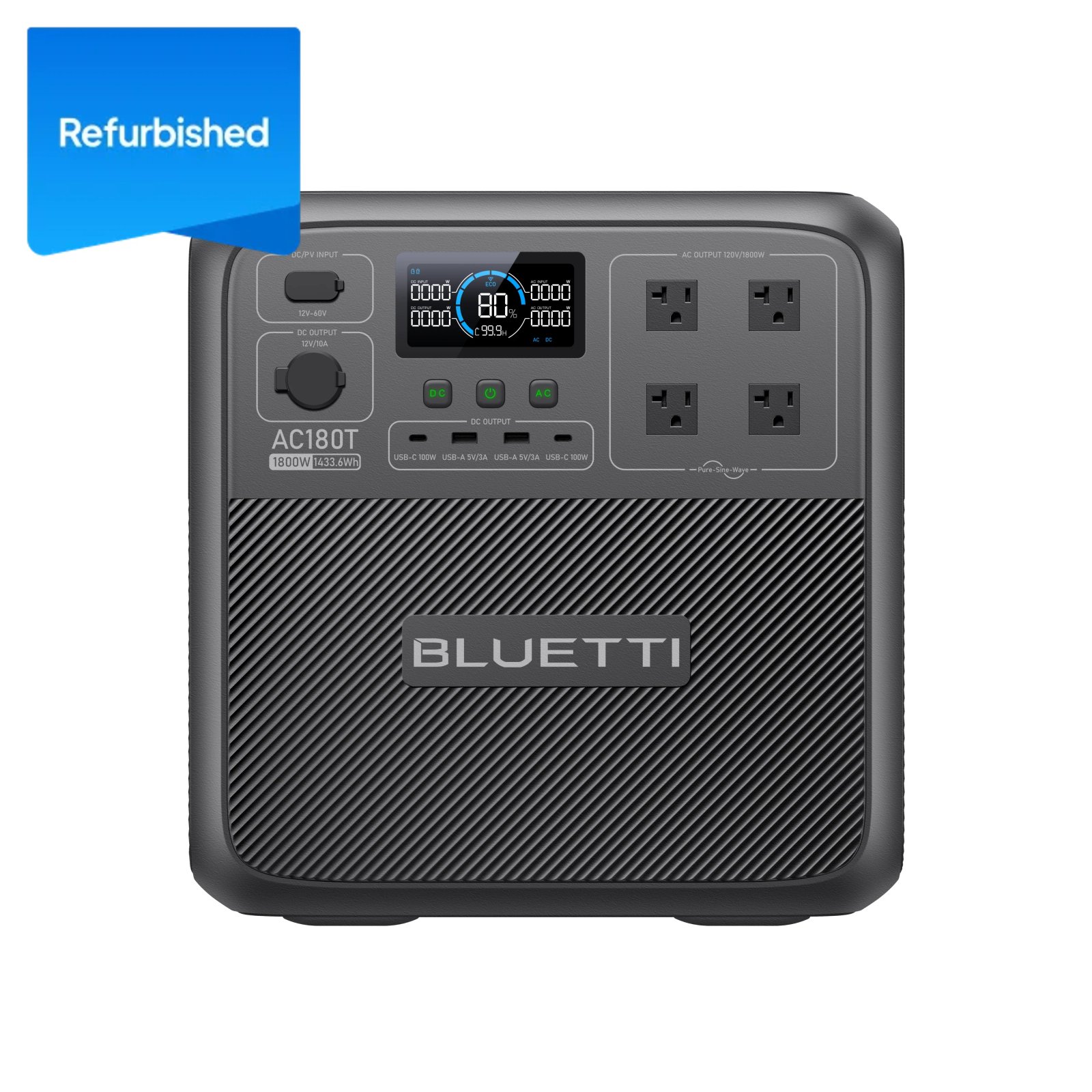
That range can serve distinct kinds of readers. A camper packing light may prioritize portability and charging options, while a household planning for outages may care more about reserve capacity, output and expansion. The brand’s Canada pages also include matched kits, which combine stations with solar panels or batteries. Those bundles can simplify compatibility research, although buyers should still check what each package includes.
Elite 30 mini keeps the idea compact
The Elite 30 mini is the clearest small-format example in the range. BLUETTI lists 288Wh capacity and 300W output, and describes the unit as weighing 3.3kg. Its page also highlights a 140W retractable USB-C cable, a practical detail for charging compatible devices without packing another cable. With its compact capacity, the Elite 30 mini is a more plausible fit for phones, laptops and modest everyday electronics than for running several large appliances. Explore the Elite 30 mini
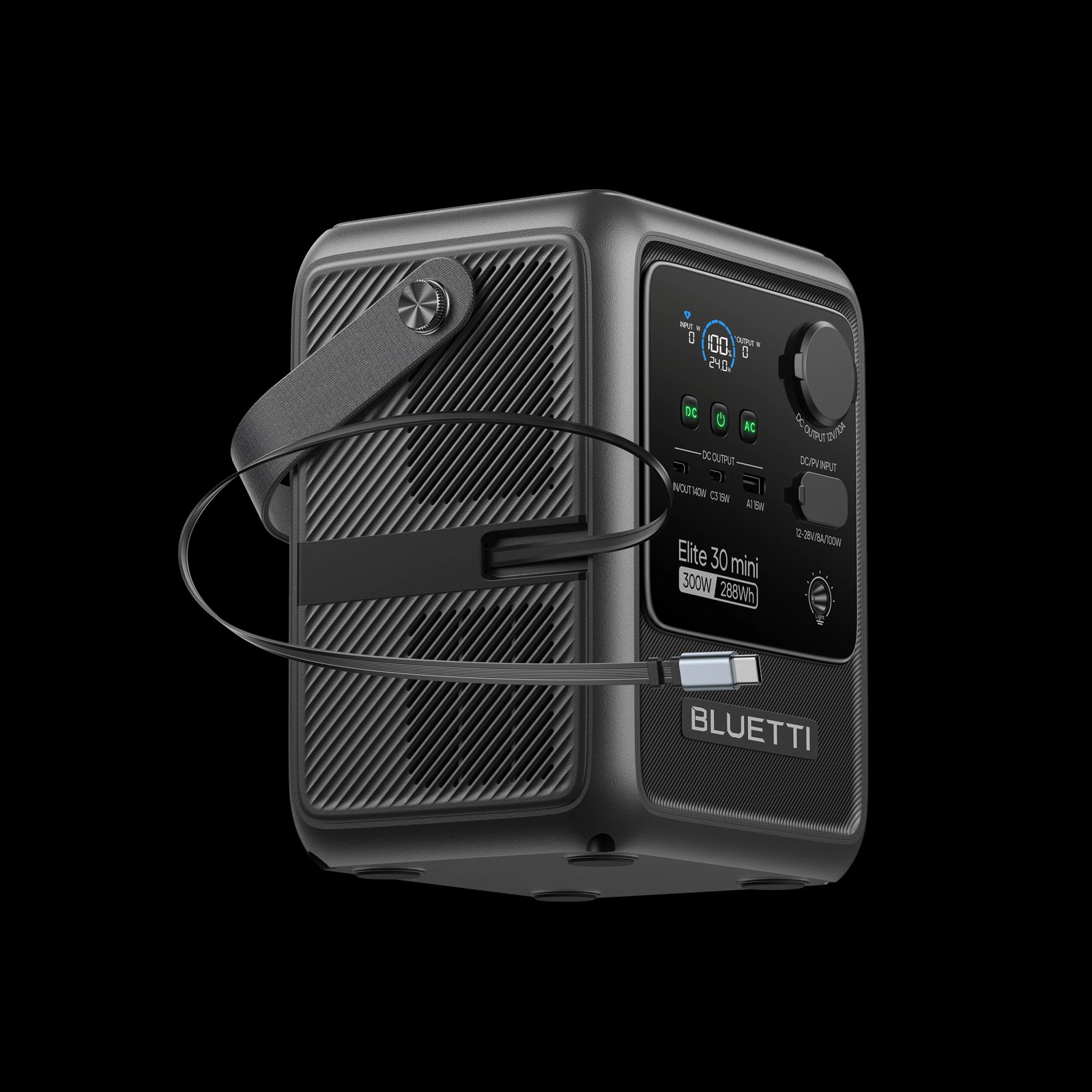
That distinction helps set expectations. A smaller unit is easier to imagine in a vehicle or on a short trip, but capacity is finite and device runtimes depend on what is connected and how much power it draws. Readers should list the devices they actually need to charge, note their wattage, and allow for conversion losses rather than treating the headline capacity as a guaranteed runtime. The Elite 30 mini is therefore a focused portable option, not a substitute for a home backup system.
Apex 200 makes expansion part of the story
At the larger end of this introduction, the Apex 200 is presented as an expandable power station. The Canada store lists 2,560Wh capacity, 3,200W output and expansion potential BLUETTI lists as up to 33kWh, with solar input also detailed on the Canada product page. This points toward planned backup or off-grid setups where the system may need to support a wider range of equipment. See Apex 200 capacity and output
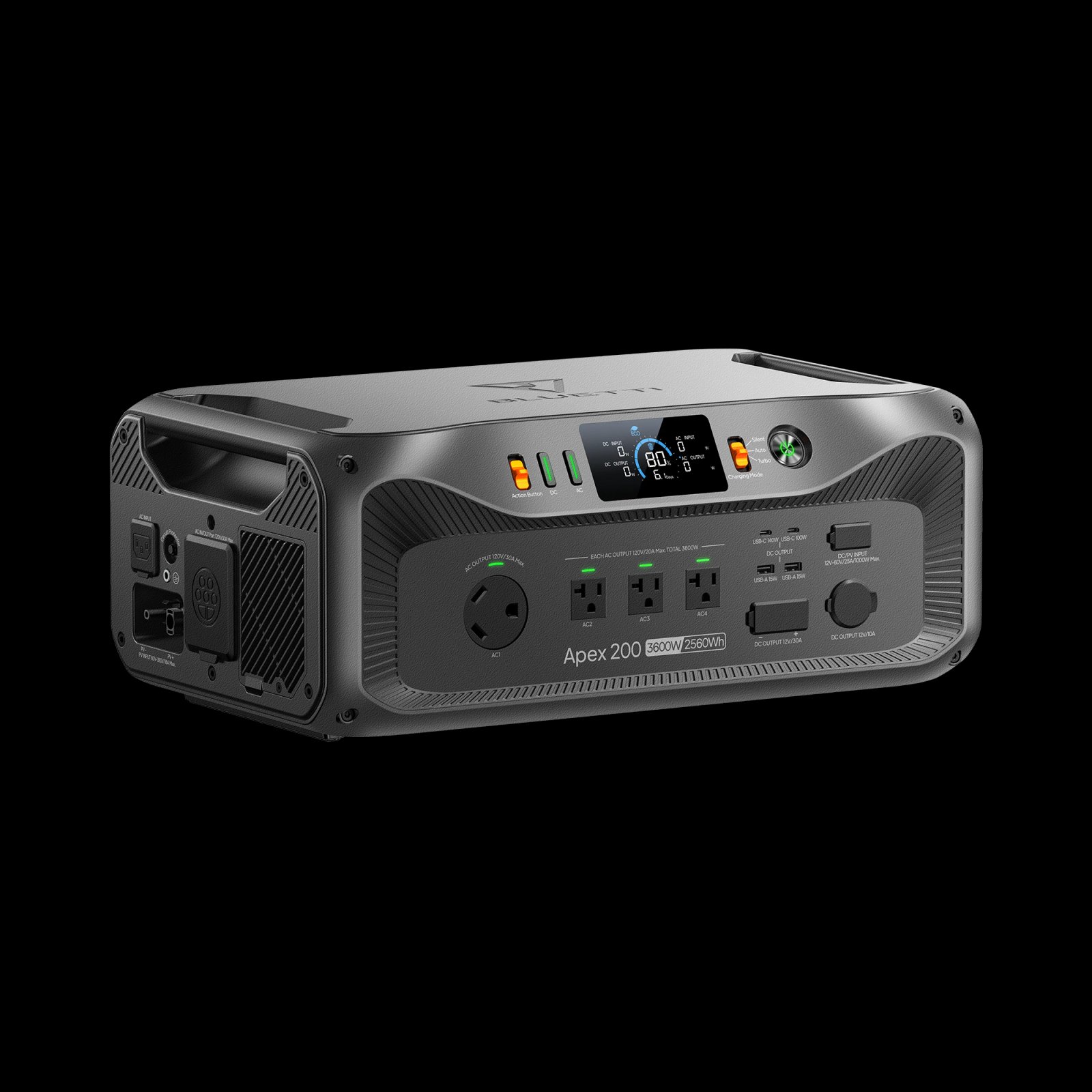
Expansion is a meaningful brand theme because it changes how a buyer can plan. A base station can be sized for current needs, with compatible battery packs considered for longer runtime. But bigger numbers do not automatically make a better match: a larger station takes more room, and modular components add setup choices. Check the supported batteries, charging paths and connection requirements on the exact Canada product page before building around the Apex 200. Review Apex 200 specifications
Elite 300 provides a larger reserve
The Elite 300 sits in a different spot: BLUETTI lists 3,014Wh capacity and 2,400W output. That larger reserve can make sense for readers with more devices or longer backup intervals, depending on their loads. The product page is the place to check its ports, recharge methods and included components. View the Elite 300 station Read the Elite 300 product details
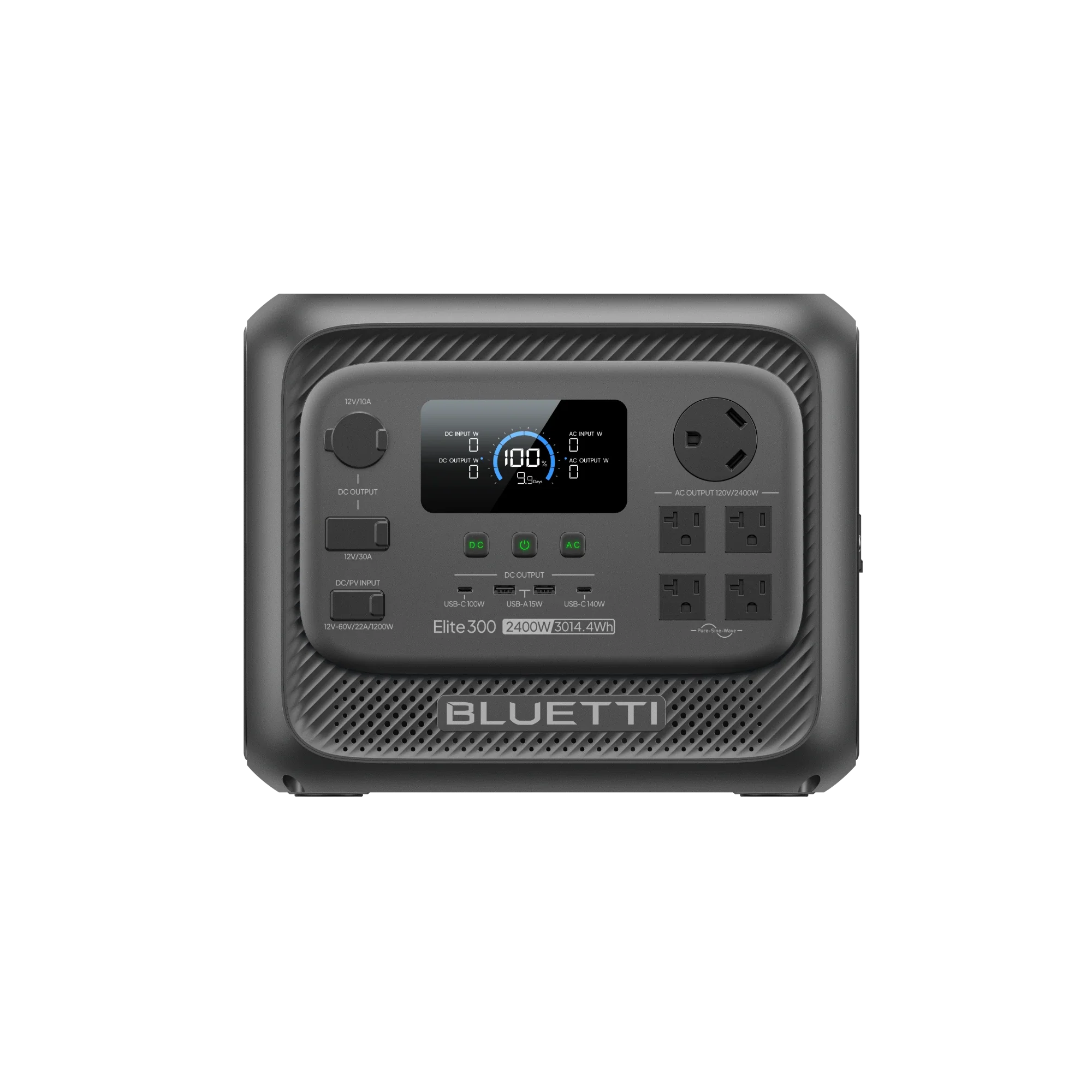
It is useful to compare the Elite and Apex names by their published specifications and intended role rather than assuming that one family is universally superior. The Elite 300 may appeal where capacity is the central need, while the Apex 200 emphasizes expansion headroom and higher listed output. Device startup demands, runtime, charging access and portability all affect the decision. Those trade-offs make the brand’s breadth valuable, but also mean shoppers need a short load list before selecting a model.
A few checks make the range easier to navigate
Before comparing individual stations, write down a realistic scenario. That turns an expansive catalogue into a manageable shortlist and helps make the product pages easier to interpret.
- List essential devices and their wattage, including anything with a motor or heating element.
- Estimate runtime by separating brief charging needs from equipment that runs continuously.
- Decide how you will recharge, such as wall power, a vehicle connection or compatible solar panels.
- Check transport and storage because capacity can add weight and occupy more space.
For a small personal kit, begin with the Elite 30 mini page and its port details. For an expandable setup, check the compatible add-ons for the Apex 200. If more reserve is the priority, compare the specifications for the Elite 300 against the devices on your list. Check the Elite 30 mini page Check Apex 200 expansion details Compare Elite 300 features
Three starting points suit different power plans
- Compact electronics: the Elite 30 mini offers listed 288Wh capacity and 300W output, with the limitation that it is intended for smaller loads. View Elite 30 mini
- Expandable backup: the Apex 200 is listed with 2,560Wh capacity and 3,200W output, though a larger system needs space and compatible add-ons. View Apex 200
- More stored energy: the Elite 300 lists 3,014Wh capacity and 2,400W output, but buyers still need to confirm runtime against their devices. View Elite 300
Ready to explore BLUETTI’s range?
We see BLUETTI as a brand for readers who want portable energy choices that extend from compact charging to larger backup systems. Its range is easiest to understand when you start with a real use case, then compare capacity, output, recharge options and expansion on the Canada store. A limitation is that the breadth of models and bundles can make selection feel technical; the product pages do not replace checking your own device requirements.
Our recommendation is to shortlist by the load you need to support and how you will recharge, then inspect the included accessories on each exact listing. Readers with modest electronics needs can start with the Elite 30 mini; readers planning more extensive backup can examine the Apex 200 and Elite 300. Explore Elite 30 mini Explore Apex 200 Explore Elite 300
BLUETTI is worth exploring when you match its station size and expansion options to a specific power plan.

