


Share This Article
Choosing a portable power station is a sizing decision before it is a brand decision. A unit that is easy to carry may not run a high draw appliance, while a large reserve can add cost and bulk if you only need to keep phones, lights and a laptop topped up.
BLUETTI’s Canadian range spans compact Elite models and expandable Apex systems. We compared the specifications and use cases on the Canadian store pages, focusing on output, stored energy, portability and room to grow. The figures below are manufacturer listings, not results from our own testing.
Some links in this article are affiliate links: if you make a purchase through them, we may receive a small commission.
Before you read on
- Elite 30 V2 is the compact pick for lower draw essentials, with 288Wh and 600W listed output.
- Elite 100 mini makes more sense when a day out or short outage calls for a larger reserve: 1,004.8Wh and 700W.
- Elite 300 offers a substantial middle ground at 3,014Wh and 2,400W.
- Apex 200 and Apex 300 suit buyers who value expansion and higher output over the lightest setup.
The Elite range trades capacity for easier handling
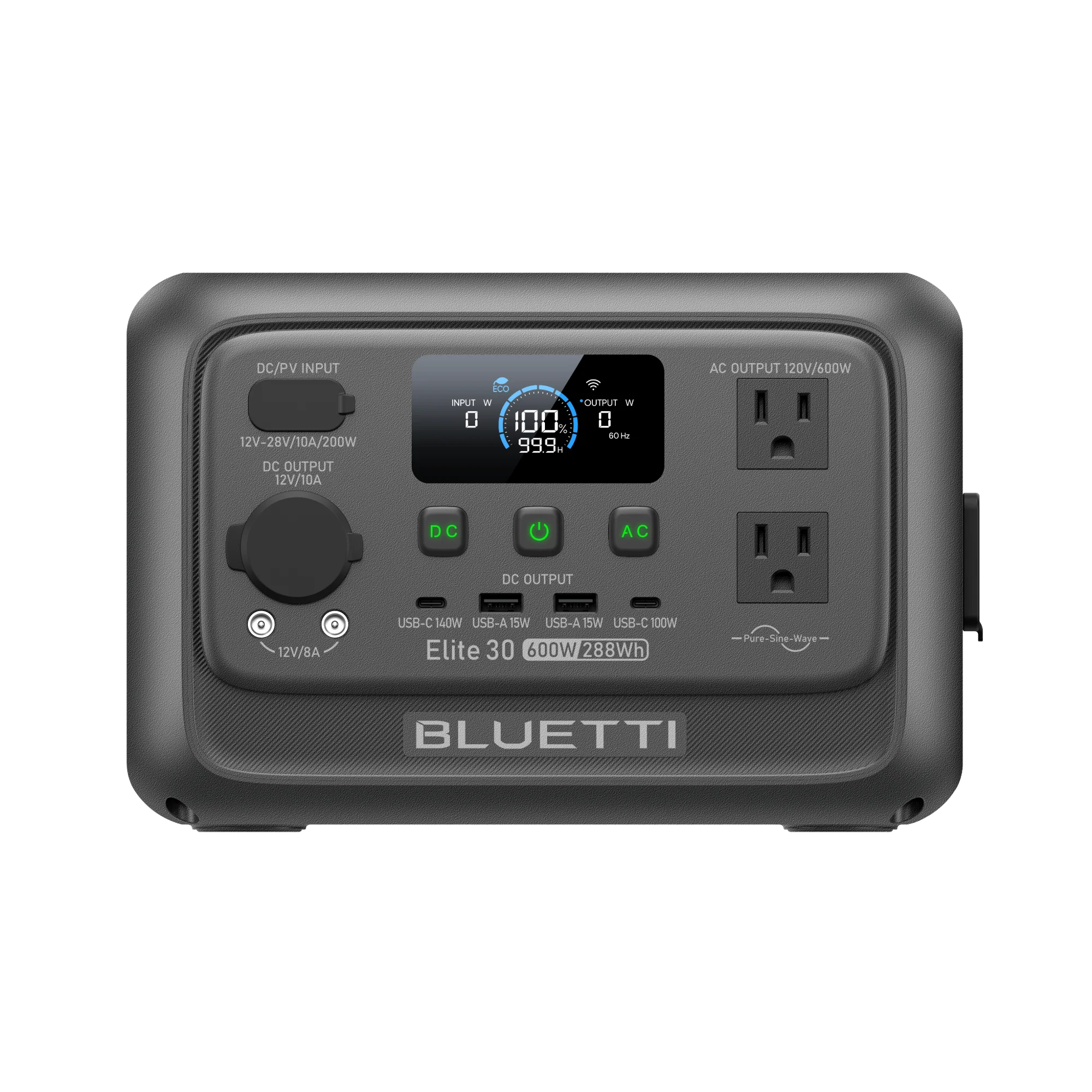
The simplest comparison is how much power you need to move. The Elite 30 V2 lists 288Wh of capacity, 600W output and a 4.3kg weight. It is the smallest choice here for charging smaller electronics, running lights or taking modest backup on a weekend trip. Its 1,500W lifting mode is not the same as continuous output, so buyers should compare the continuous rating with each device’s requirements.
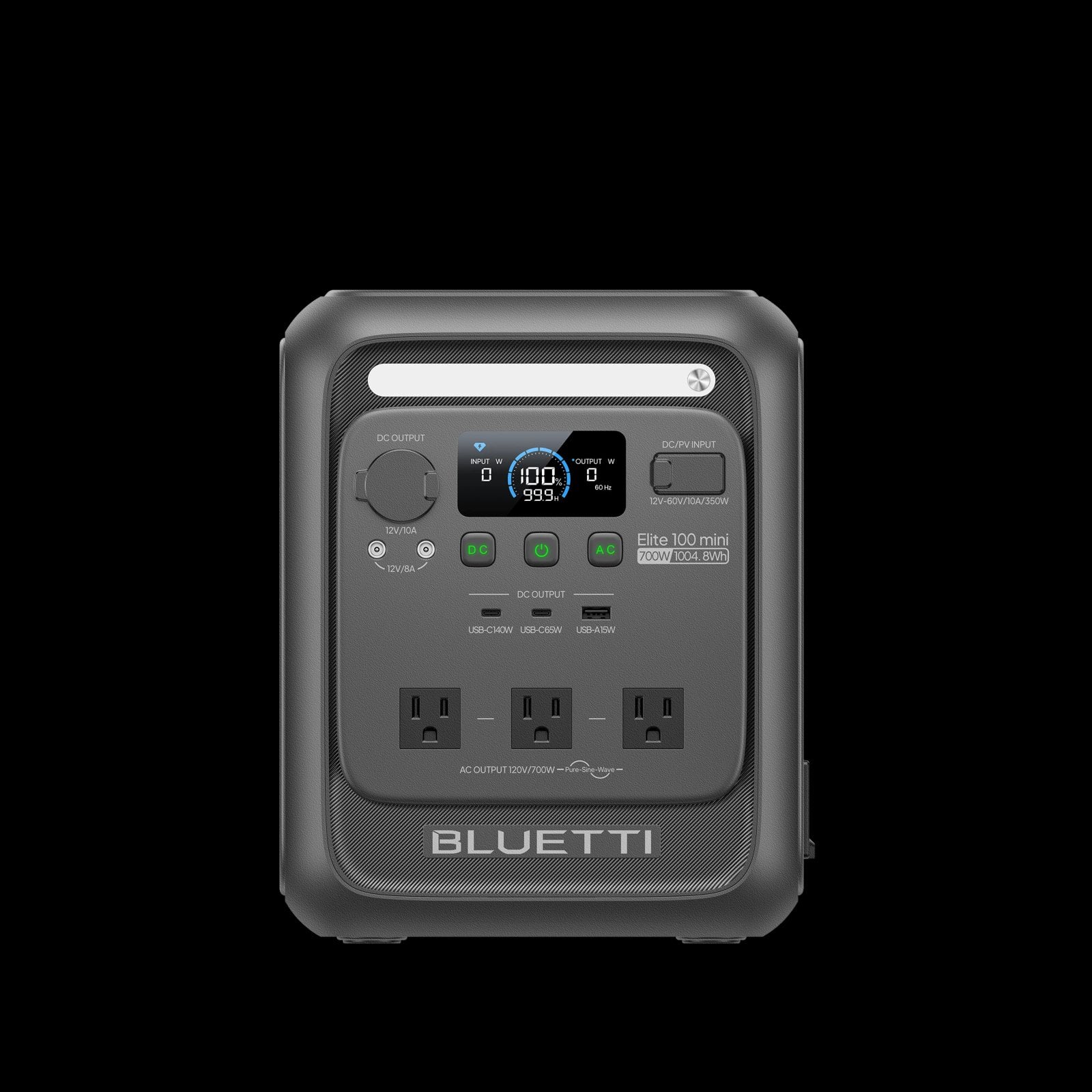
The Elite 100 mini moves up to 1,004.8Wh, 700W and nine ports according to its Canadian listing. That extra capacity can stretch a small-device setup across more charging cycles, but its output remains a constraint for appliances with high startup or running demand. The compact category is attractive when transport matters most; for long outages, a higher-capacity model reduces the need to ration every device.
- Choose the smaller Elite when weight and storage space lead your checklist.
- Move up when you want more stored energy for repeated phone, laptop or lighting use.
- Check the continuous wattage and appliance startup demand before treating any station as home backup.
Elite 300 brings a larger reserve without a modular system
The Elite 300 is the more substantial all-in-one option in this group. BLUETTI lists 3,014Wh, 2,400W output, eight ports, app control and a UPS switching claim under 10 milliseconds. It gives a household or RV user more stored energy and output headroom than the smaller Elite units without requiring a separate expansion battery to reach its base capacity.
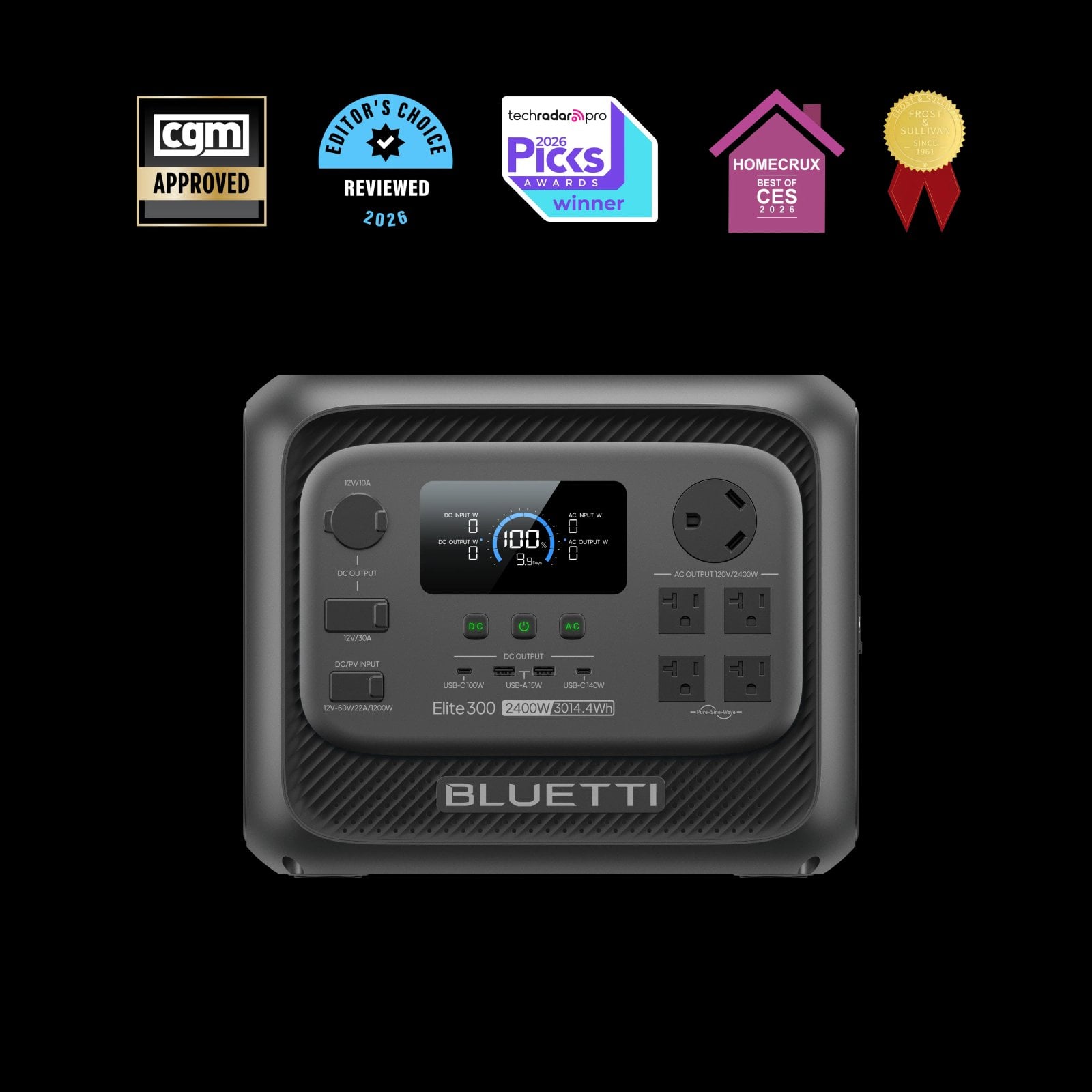
The trade-off is scale: this is a larger all-in-one unit than the compact Elite options, and its base capacity is fixed compared with a system designed around expansion. Check the Canadian listing for current dimensions and configuration details before deciding whether its footprint suits your storage space. If your likely load is a router, lights and a few personal devices, this much reserve can be unnecessary; if you want to support more equipment at once, it is a clearer fit. Consider the Elite 300 when you value a ready-to-use larger station over future modularity.
Apex models make room for a growing backup plan
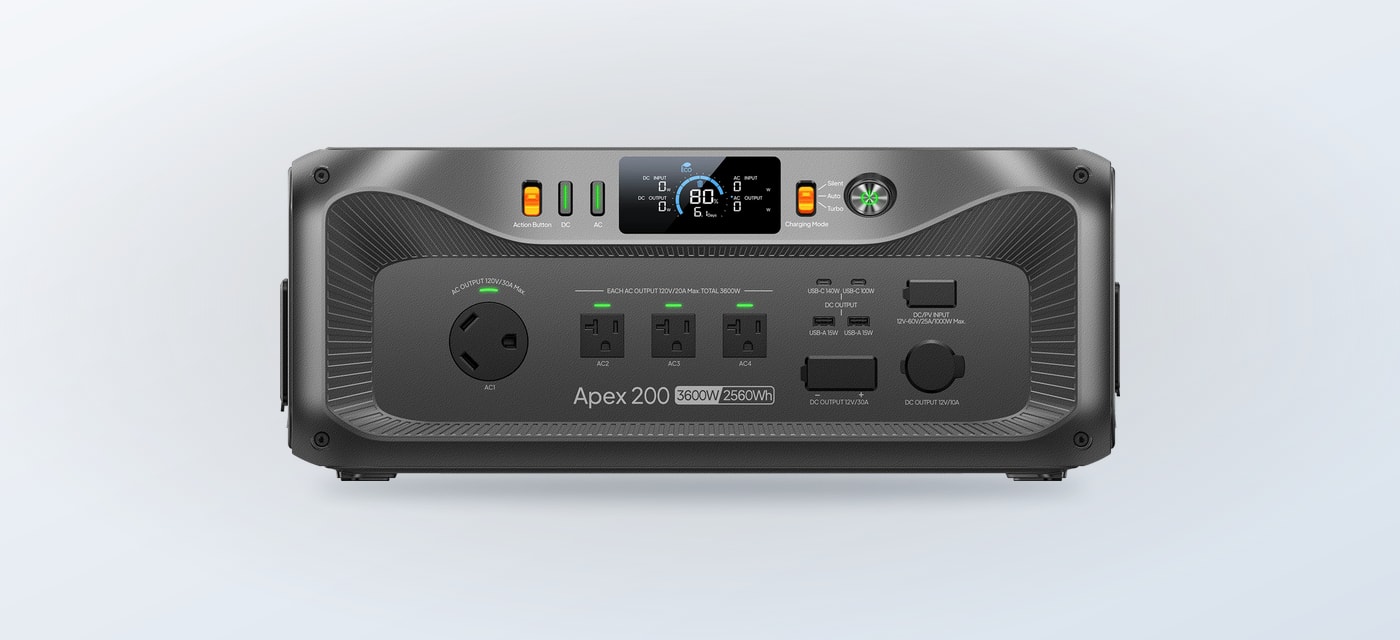
The Canadian Apex 200 listing describes 2,560Wh, up to 3,200W output, solar input up to 3,000W and expansion up to 33kWh. That combination is more about system planning than the smallest possible travel kit. A household can start with a base unit and add capacity later, but the extra batteries and charging components add expense, footprint and setup decisions.
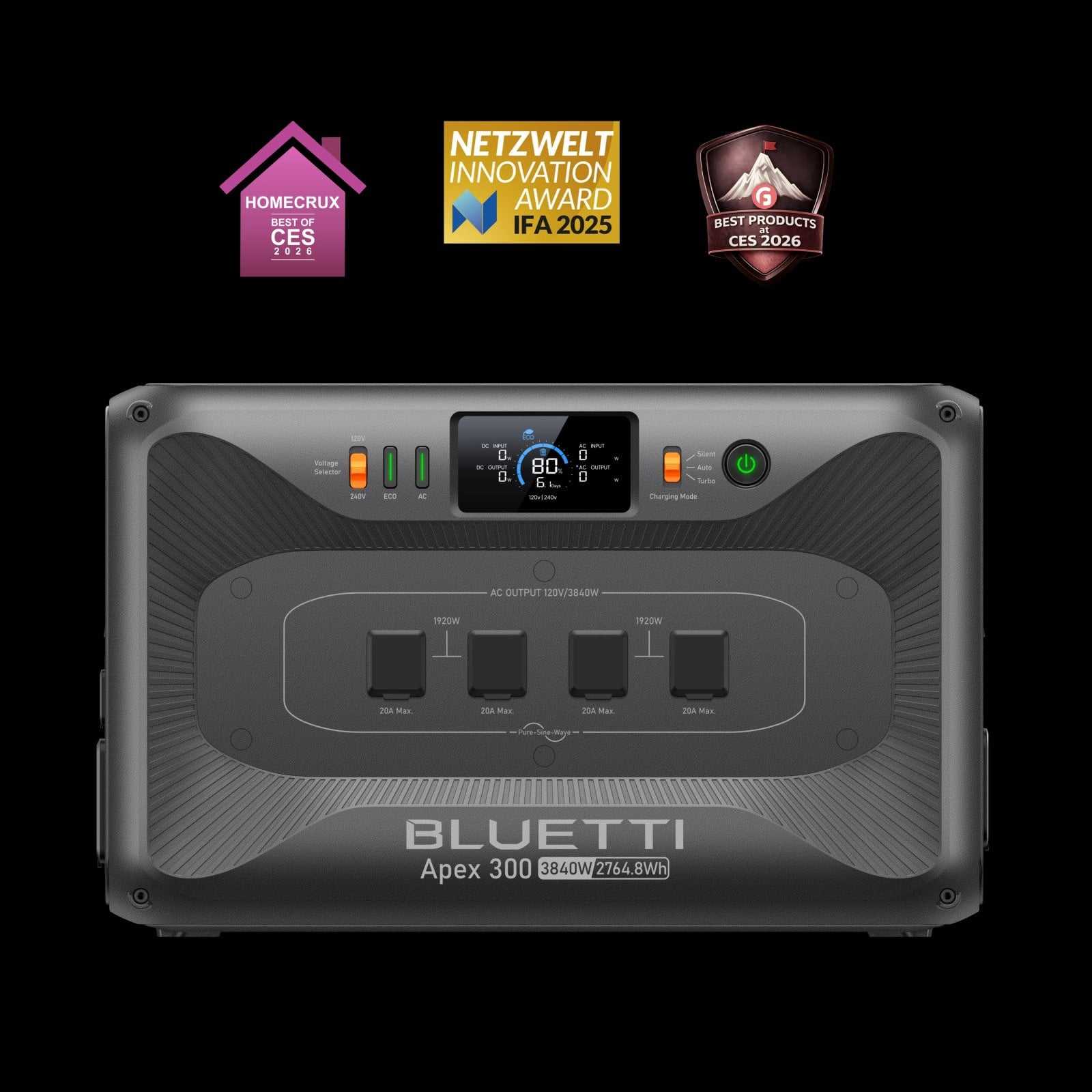
The Apex 300 is listed at 2,764.8Wh and 3,840W with 120V/240V support. It offers stronger output and two-voltage flexibility from the outset, making it the more compelling comparison for buyers considering larger appliances or an integrated backup plan. It is also the least casual purchase here: understand the installation, electrical compatibility and expansion costs before choosing it. BLUETTI’s Canada product details and support pages should be checked for the configuration you intend to use.
| Model | Listed capacity / output | Best fit | Main trade-off |
|---|---|---|---|
| Elite 30 V2 | 288Wh / 600W; 4.3kg | Lowest carry burden | Smallest reserve |
| Elite 100 mini | 1,004.8Wh / 700W | Portable small-device power | Limited appliance output |
| Elite 300 | 3,014Wh / 2,400W | Large all-in-one reserve | Bulk and fixed base capacity |
| Apex 300 | 2,764.8Wh / 3,840W | Higher output and 120V/240V | More planning and setup complexity |
A small gas generator has the advantage when long runtimes and refuelling are planned, while a battery station avoids carrying fuel and needs recharging between uses. Follow each model’s Canadian manual for placement and ventilation guidance rather than assuming every battery setup suits every indoor location. A basic power bank remains a more proportionate choice for occasional phone charging; these stations are aimed at people who also need larger capacity or a wider mix of AC and DC outputs. Compare the port list for the exact model before relying on a particular connector.
- For travel and low draw devices, the Elite 30 V2 wins on compactness.
- For longer light-duty sessions, the Elite 100 mini is the sensible step up.
- For a large portable reserve without system building, choose Elite 300.
- For a plan that may grow, compare Apex 200; for higher output and 120V/240V, compare Apex 300.
Ready to choose a BLUETTI station by load?
Our pick depends on the load: Elite 100 mini balances a more manageable carry size against more stored energy than Elite 30 V2 for portable electronics. Elite 300 is the clearer pick for a substantial standalone reserve. Choose Apex 300 if your plan specifically needs its listed 3,840W output or 120V/240V support. The Apex route can scale, but add-on batteries and system planning are a poor match for occasional charging.
Before choosing, total the watts of the devices you expect to run, estimate how many hours they need, and leave room for startup surges. Then compare the Canadian product pages for included cables, solar compatibility, warranty terms and current configuration options. Specifications and bundles can change, and the right winner is the one that covers your actual load without paying for unused capacity.
Choose Elite 100 mini for portable essentials, Elite 300 for a larger all-in-one reserve, and Apex 300 for higher-output backup planning.

