


Share This Article
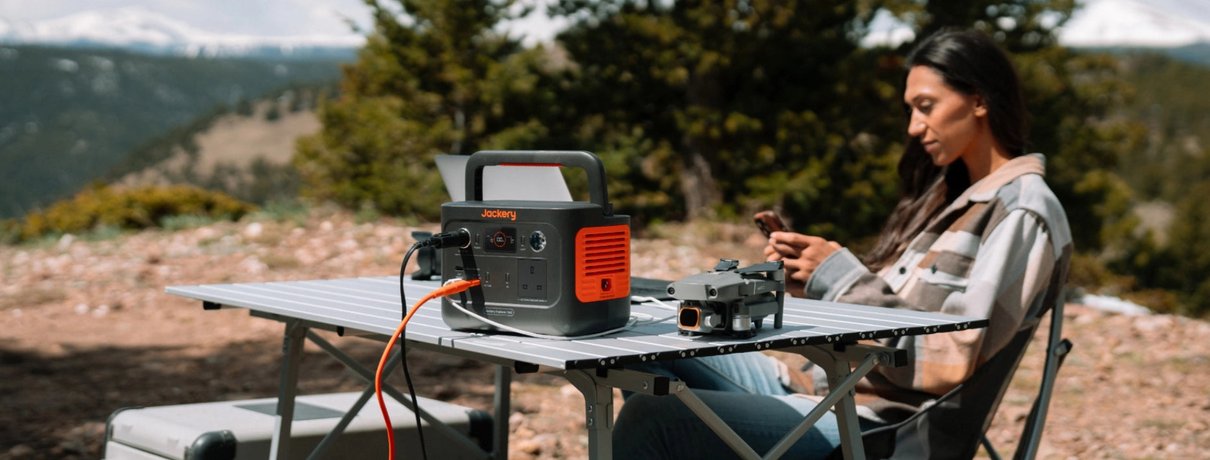
Portable power sounds simple until the use case gets specific. A short camping trip, a laptop during a power cut and a fridge that needs continuity all ask different things of the battery, inverter and recharge plan. Jackery’s UK store covers that spread, but the range only becomes useful when the headline capacity is translated into a real job.
We reviewed the published product information with that question in mind: where does Jackery offer a sensible match, and where does a bigger station create more weight, cost and planning than a reader needs? The answer is less about choosing the largest model and more about choosing the right level of output, portability and charging flexibility.
Some links in this article are affiliate links: if you make a purchase through them, we may receive a small commission.
Before you read on
- Explorer 240 v2 is the compact route for personal electronics, lights and lighter outdoor loads.
- Solar Generator 500 v2 adds 512Wh, 500W output and a solar-bundle option for campsites or short outages.
- Explorer 1000 v2 brings 1070Wh, 1500W output, an LFP battery, app-supported emergency charging and UPS switching.
- Solar Generator 3000 v2 is the high-capacity choice for heavier backup, with a larger footprint and a more involved setup.
- Current price and bundle availability vary, so the exact UK product page matters before checkout.
Jackery makes capacity a use-case decision
The store’s Explorer and Solar Generator families cover compact stations, mid-sized camping equipment and larger home-backup systems. That breadth is a genuine strength: a reader does not have to force a heavy unit into a small weekend setup, or expect a compact battery to behave like a household backup system.
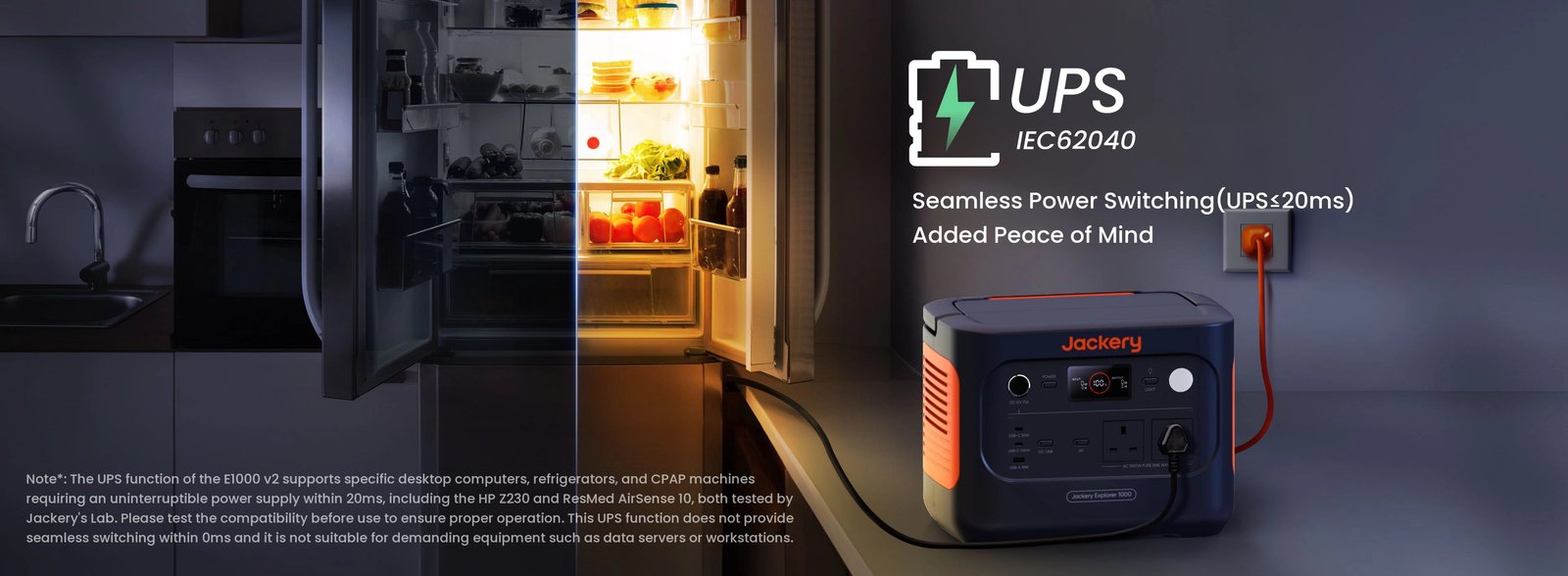
There is also a useful distinction between a station and a bundle. A standalone Explorer 1000 v2 is a battery-and-inverter choice, while a Solar Generator pairing adds panel input and changes how the kit can be replenished away from a wall socket. The store lists AC, solar and car charging across relevant products, but the exact inputs and accessories still need checking.
Explorer 240 v2 keeps lighter trips manageable
The Explorer 240 v2 is listed with 256Wh and 300W output. Jackery also highlights its foldable handle, LFP battery and app-controlled emergency charging. That combination points to a compact travel companion for phones, cameras, laptops, lights and smaller appliances rather than a solution for several high-draw devices at once.
Its strengths are easy to explain: small capacity, useful portability and multiple charging routes. The limit is just as important. A compact station gives less headroom when a fridge, kettle or power tool enters the plan. Check the Explorer 240 v2 details for the current configuration, included cable and charging specifications.
Solar Generator 500 v2 adds a practical middle step
The Solar Generator 500 v2 combines a 512Wh station with 500W output and a LiFePO4 battery. Jackery lists AC, solar, car and combined charging options, plus a UPS function with a fast switch-over claim. For campsite lighting, personal devices, a small fridge or a short home interruption, that is a more comfortable middle ground than the smallest Explorer.
This is also where the bundle question becomes material. A panel can make the setup more self-contained, but it adds packing space and depends on usable daylight. The current Solar Generator 500 v2 page should be used to distinguish the station-only version from the panel bundle and to confirm what is included.
Explorer 1000 v2 gives useful headroom, with trade-offs
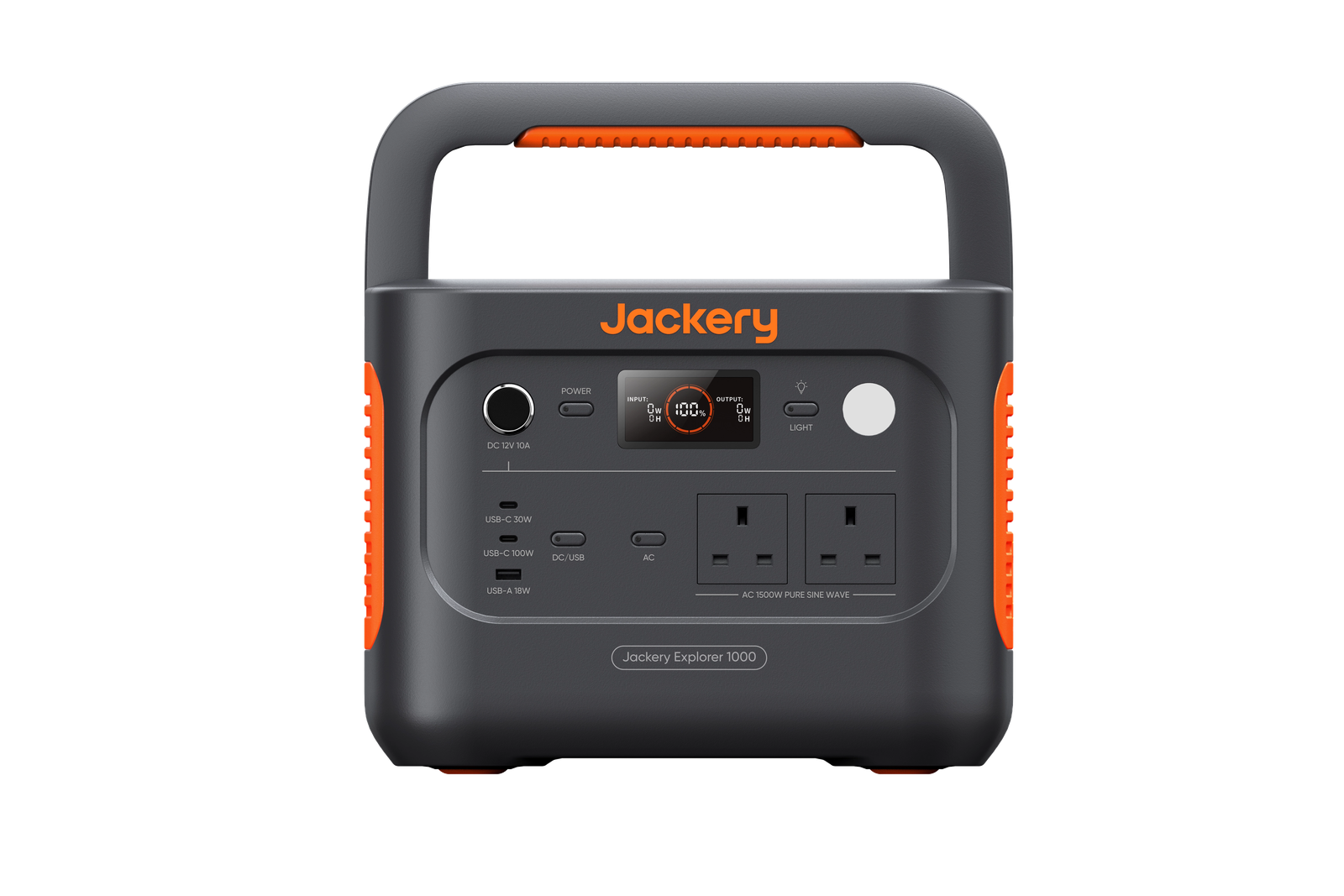
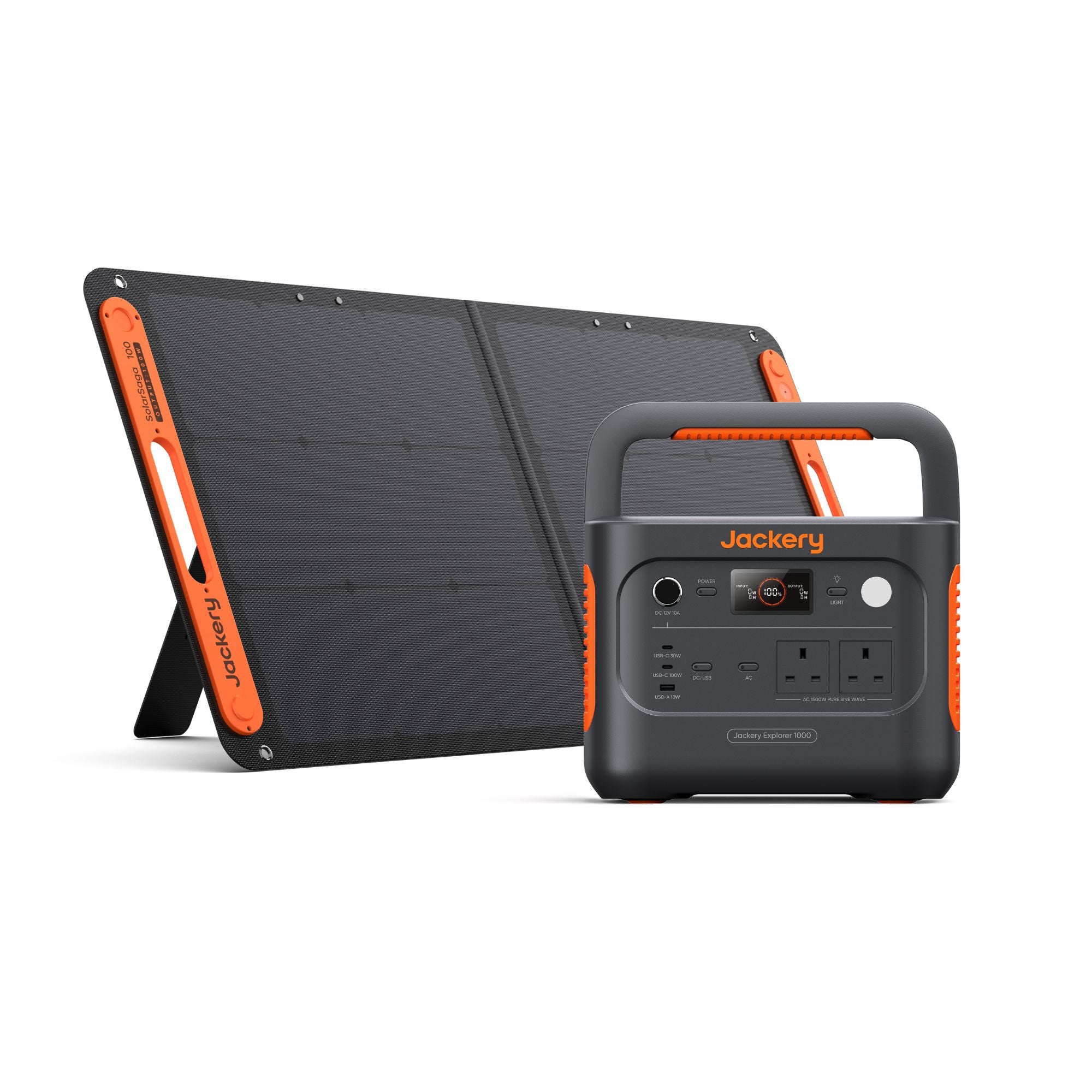
The Explorer 1000 v2 is listed with 1070Wh, 1500W rated output and a LiFePO4 battery. The store says it supports USB-A and USB-C charging, quiet operation, app control, emergency charging and UPS switching. Those details make it the most convincing all-rounder here for readers balancing camping, remote work and essential home backup.
Its strongest case is headroom without moving to the largest class. It can accommodate more demanding essentials than the 240 v2 or 500 v2, while remaining designed for transport. The limitation is that higher capacity does not guarantee a particular runtime: actual use depends on the wattage, duty cycle and charging conditions of each device. Review the Explorer 1000 v2 specification list before matching it to a fridge, kettle or medical device.
Solar Generator 3000 v2 is for planned heavy backup
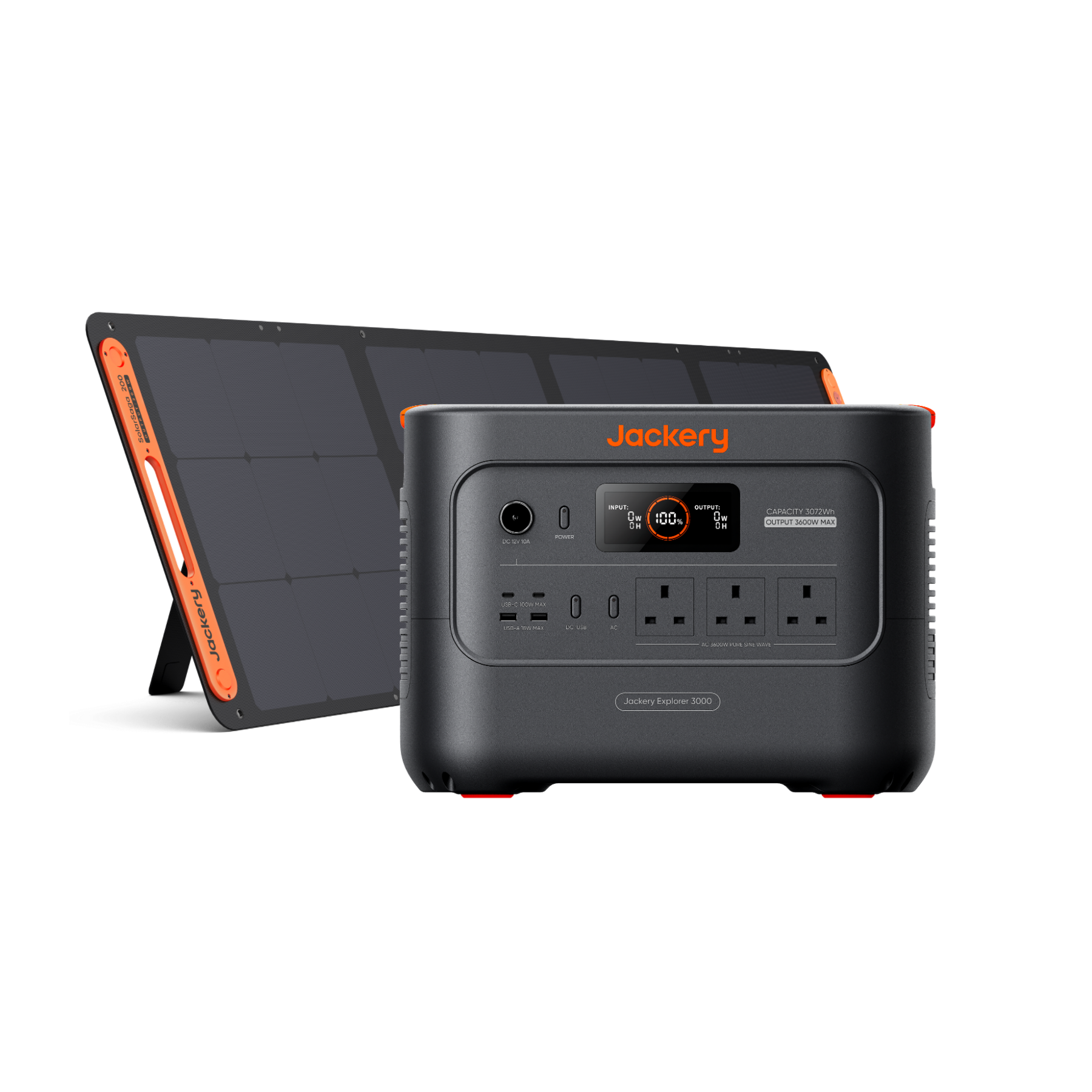
The Solar Generator 3000 v2 moves into a different category with 3072Wh capacity and 3600W output. Jackery presents it for home essentials, off-grid work and larger outdoor setups, with a SolarSaga panel option and a larger physical format. This is the choice for readers who have already listed several high-draw devices and know why a smaller station will not do.
The trade-off is not a flaw in the product; it is the consequence of scale. More output and storage means more space, more money and more planning around transport, solar placement and safe connections. The Solar Generator 3000 v2 page should be treated as a configuration check, not simply a larger version of a camping battery.
The range works best when the limits are visible
Our reading of Jackery’s range leaves a balanced picture. The product ladder is clear, newer models emphasise LFP batteries and the charging choices are useful for mixed indoor and outdoor use. The main weakness is the temptation to compare capacity figures without planning the load, space and recharge route.
- Start with devices: list the essentials and their wattage before choosing a model.
- Separate capacity from output: a large battery can still be unsuitable for a device with a high starting load.
- Choose solar deliberately: a panel helps away from the mains but adds space and weather dependence.
- Check the exact bundle: cables, panels, warranties and availability can differ between options.
For a smaller travel setup, the Explorer 240 v2 is the sensible direction. For a broader camping and backup brief, the Explorer 1000 v2 has the most convincing balance. The Solar Generator 3000 v2 earns consideration only when the larger workload justifies the larger system.
Ready to choose a Jackery power level?
Our recommendation is to treat Jackery as a strong fit for readers who want a recognisable route from compact personal backup to a more capable solar-supported system. The Explorer 1000 v2 is the best general starting point in this review because it combines useful output, LFP battery technology, portability and several charging options.
The honest limitation is that even a well-specified station cannot replace a load calculation or a safe backup plan. Check the current UK price, stock, bundle contents and product guidance for the model that matches your devices.
Jackery is worth considering when you choose by workload first, with the Explorer 1000 v2 the most balanced route for mixed camping and backup use.

