


Share This Article
Portable power sounds simple until you are standing in a chilly campsite deciding whether a battery will run the essentials, or trying to work out if a larger unit is worth carrying. I spent time comparing the current Jackery range, its stated capacities and the use cases the UK site actually supports. The result is a useful spread of compact, mid-size and higher-capacity options, but they are not interchangeable.
My short verdict: Jackery is strongest when you want a recognisable, well-supported ecosystem of battery stations, solar charging and accessories. The trade-off is price. The headline discounts move, and the larger models become substantial purchases, so the right capacity matters more than the biggest number. I also checked the current UK collection for delivery, bundles and live availability before forming this shortlist.
What Jackery gets right about portable power
The brand makes battery power feel more approachable than a technical equipment catalogue. Its stations combine AC sockets with USB and DC outputs, and the wider system includes foldable SolarSaga panels, battery packs, carrying cases and car-charging options. That breadth is useful if your first purchase becomes part of a longer-term setup.
- Clear capacity ladder: the range runs from small 99Wh units to 3072Wh systems.
- Solar route: compatible foldable panels offer a quieter renewable charging option.
- Useful portability: handles, compact formats and dedicated bags make transport realistic.
- Broad use cases: camping, caravans, narrowboats, DIY and home backup are all covered.
There are caveats. A battery station is not a magic replacement for a full home generator, and output depends on the appliance you connect. Solar recharge also depends heavily on weather, positioning and panel size. The Jackery buying guides help explain those choices, but I would still calculate your actual wattage before ordering.
The three models I would actually shortlist
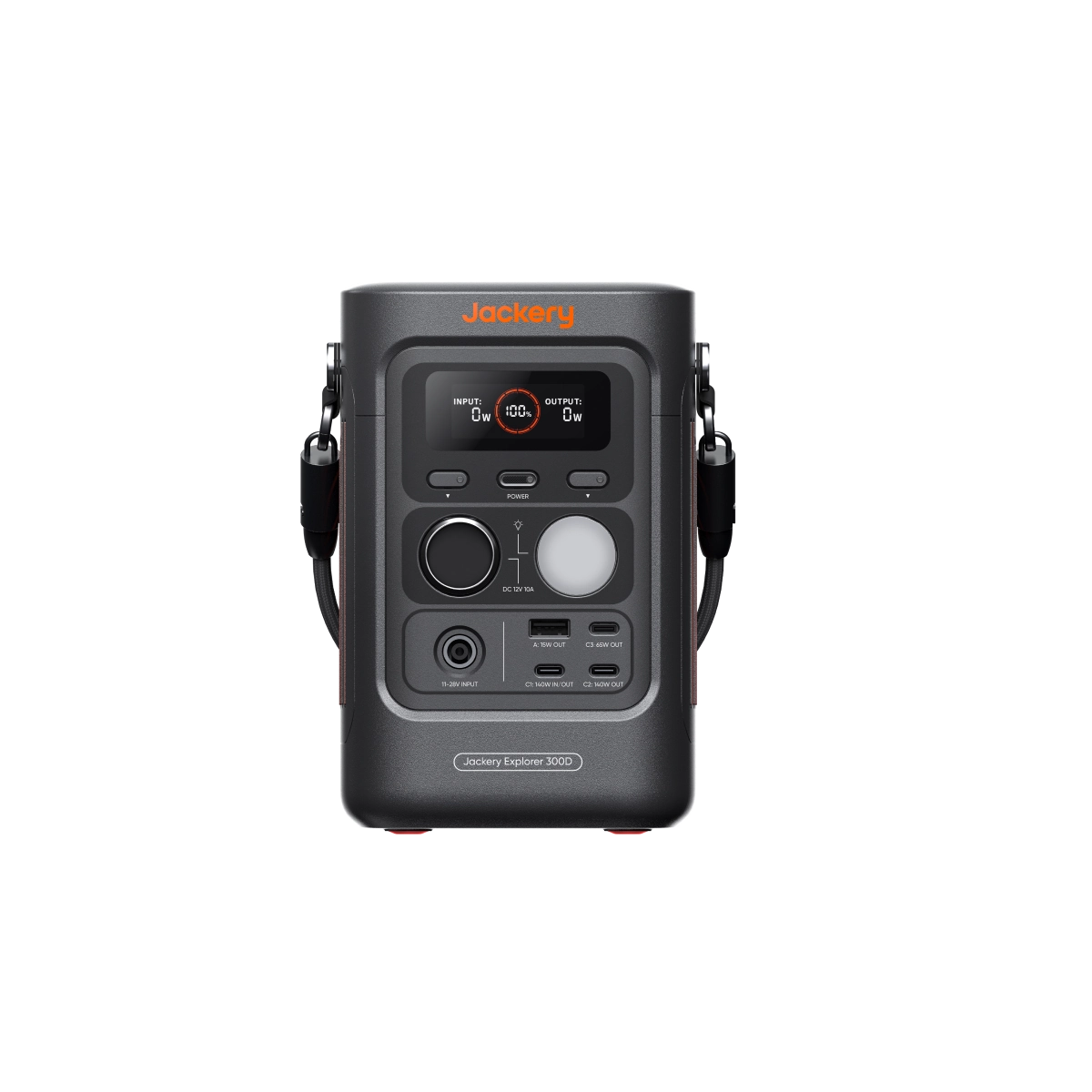
For most readers, I would narrow the range to three products. The Explorer 300D Portable Power Station is listed at £219.00 and offers 288Wh with a LiFePO4 battery. It is the easy-to-understand starter: light enough for day trips, fishing, small work projects and basic emergency charging. Its limitation is equally clear: 288Wh disappears quickly if you add a kettle, heater or high-draw cooking appliance.
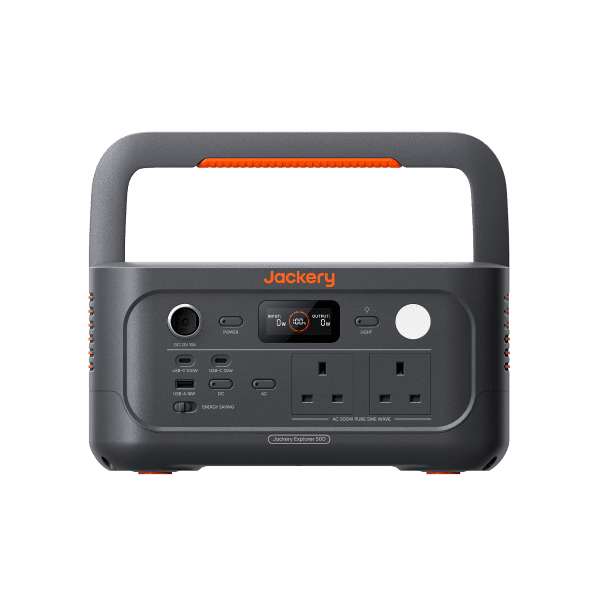
The Explorer 500 v2 is the balanced choice at a listed £449.00. Its 512Wh capacity and 500W rated output create more breathing room for cameras, laptops, lights, small coolers and weekend camping equipment. This is the model I would choose for a couple who want a genuinely useful camp companion without jumping straight to home-backup scale. Do check the live Explorer 500 v2 page for current promotions before treating that price as permanent.
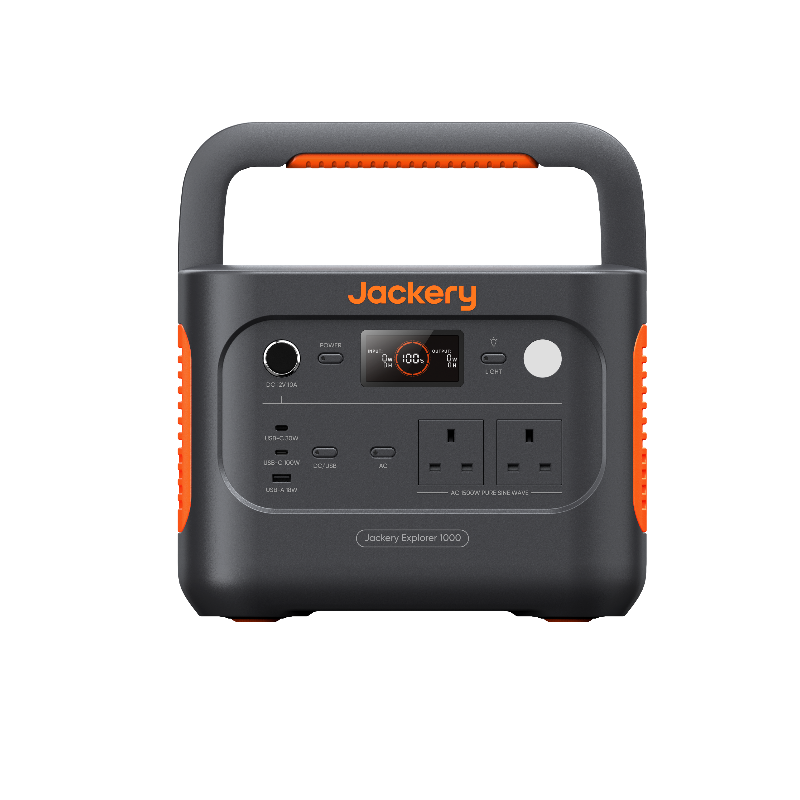
For serious weekend use and more demanding backup, the Explorer 1000 v2 lists at £899.00, with 1070Wh and 1500W rated output. That is a meaningful step up for multiple devices, a caravan setup or keeping important kit running during an outage. It is also where weight, cost and recharge planning matter much more. I would only choose it after making a list of the appliances you genuinely need.
- Choose 300D for portability, essentials and a lower entry cost.
- Choose 500 v2 for a flexible camping and travel middle ground.
- Choose 1000 v2 when runtime and higher output justify the larger investment.
In other words, the capacity figures are not just marketing decoration. They shape how relaxed the experience feels. A station that is too small forces constant power budgeting, while one that is too large can become an awkward object to move and store. The full Jackery product comparison is worth opening beside your appliance list.
Where the range works best, and where it does not
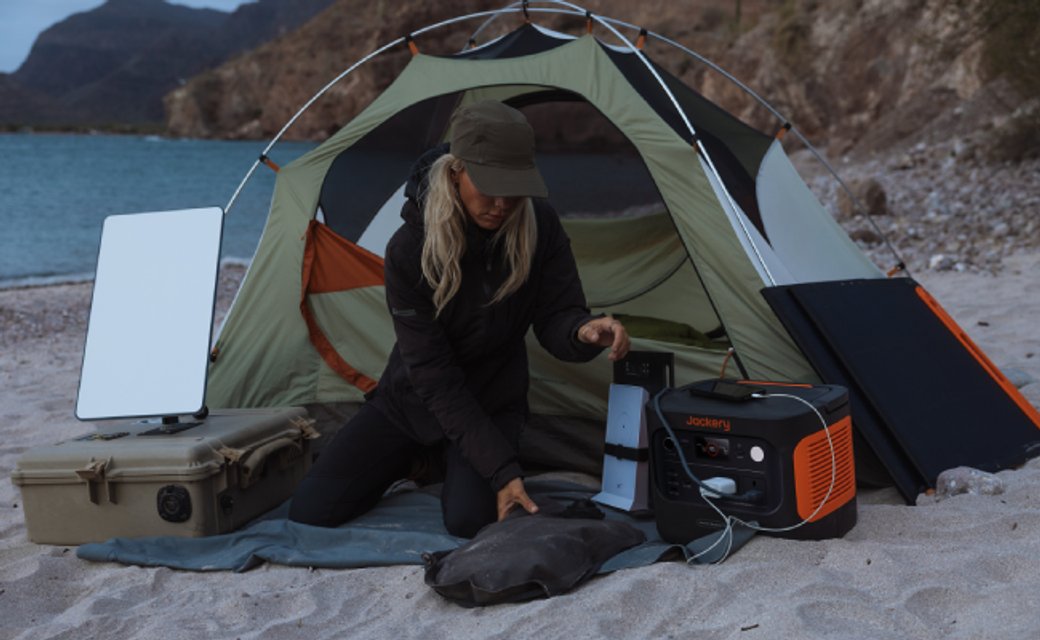
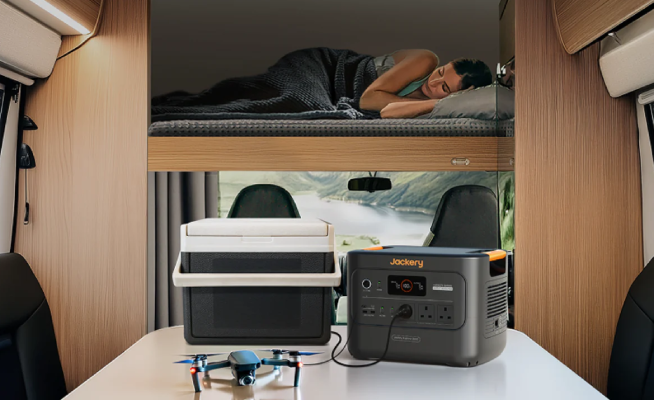
Jackery makes most sense outdoors. A solar generator setup can keep phones, lights, cameras and small appliances organised on a campsite, while the brand’s caravan and narrowboat guidance shows how the same idea extends to slower travel. The quiet operation is a real advantage when you do not want a petrol engine beside the tent.
- Camping: prioritise size, weather planning and the outputs your group will share.
- Caravan or boat: step up in capacity if several devices run together.
- Home backup: confirm wattage, cable reach and recharge expectations in advance.
- DIY: match output to tools rather than assuming every station can run them.
The weak point is value at the top end. If you only need phone charging and occasional lighting, the larger models are unnecessary. Even the 500 v2 option deserves a proper use case at £449.00. Conversely, buying the smallest unit and then adding panels, cases and adapters can narrow the apparent saving. Read the accessories section as part of the total cost, not as an afterthought.
My buying checks before checkout
I would make four checks before committing. First, add the running wattage of the devices you expect to use, with extra room for startup demand. Second, decide whether you can recharge from the mains, a car or a solar panel. Third, measure where the station will live and how you will carry it. Finally, check the current price, stock, delivery terms and warranty information on the UK store.
Do not let a temporary discount make the decision for you. Jackery’s sale messaging can be attractive, but the honest comparison is between the product you will use and the product you can comfortably transport, store and recharge. I would rather see someone buy the 300D at £219.00 for a genuinely suitable routine than overbuy an impressive station that stays in a cupboard.
Final verdict
After comparing the range, Jackery earns a qualified recommendation. Its ecosystem is coherent, the use cases are easy to understand and the three shortlisted models cover distinct needs. The Explorer 300D is the sensible entry point, the Explorer 500 v2 is the most versatile compromise, and the Explorer 1000 v2 is for buyers with a clear demand for extra runtime and output.
Jackery is worth considering when you match capacity to a real routine, but the best model is the smallest one that comfortably powers what you actually use.

