


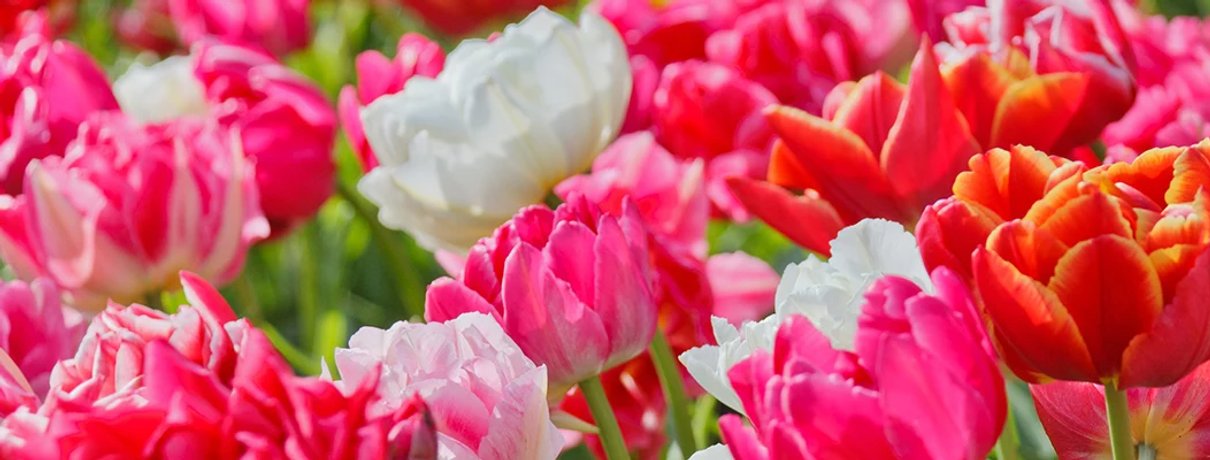
Share This Article
Buying spring bulbs is partly a question of colour, but the more useful comparison is what you want the planting to do. A gradual display, a generous run of cut flowers and one sculptural focal point call for different bulbs, even when they share the same autumn planting window.
We compared three distinct options from DutchGrown™‘s UK range: Eight Weeks of Daffodils, Tulip Jumbo Darwin Mix and Allium Globemaster. The product pages describe their intended flowering, planting and garden uses, which makes it possible to match each to a different job without pretending that one is universally best.
Some links in this article are affiliate links: if you make a purchase through them, we may receive a small commission.
Before you read on
- Longest daffodil sequence: Eight Weeks of Daffodils mixes early, mid and late varieties.
- Cutting and mixed colour: Tulip Jumbo Darwin Mix is marked as suitable for cutting and naturalising.
- Strongest focal point: Allium Globemaster has large spherical purple flowers and a listed height of 90 cm.
- Best planning shortcut: A curated mix reduces selection work, while individual varieties give more control.
Three collections answer different garden needs
The clearest difference is not simply daffodil versus tulip versus allium. It is sequence, volume or shape. The daffodil collection aims to extend one familiar flower season. The Darwin mix offers a broad tulip planting with cutting among its stated uses. Globemaster is a single variety suited to a deliberate vertical accent.
| Option | Garden role | What stands out | Main trade-off |
|---|---|---|---|
| Eight Weeks of Daffodils | Longer daffodil season | Early, mid and late types | Less control over exact varieties |
| Tulip Jumbo Darwin Mix | Mixed tulip border or cutting | Cutting and naturalising listed | Mixed colours, not a single cultivar |
| Allium Globemaster | Architectural focal point | 90 cm height; spherical blooms | One strong form, not broad colour coverage |
For context, a single-cultivar option such as Tulip Houston Triumph Mix narrows the decision toward one tulip type, while the Darwin selection is presented as a mix. Mixed planting brings less precision. That distinction matters if you are coordinating a precise palette; buyers comparing these with loose bulbs at a garden centre should weigh that flexibility against the convenience of a ready-made selection. The store lists bulb-count variants on product pages, so pack size is another part of comparing value, but exact costs can change and should be checked there. The live option listing for Eight Weeks of Daffodils is the relevant place to check.
Eight Weeks of Daffodils spreads the season
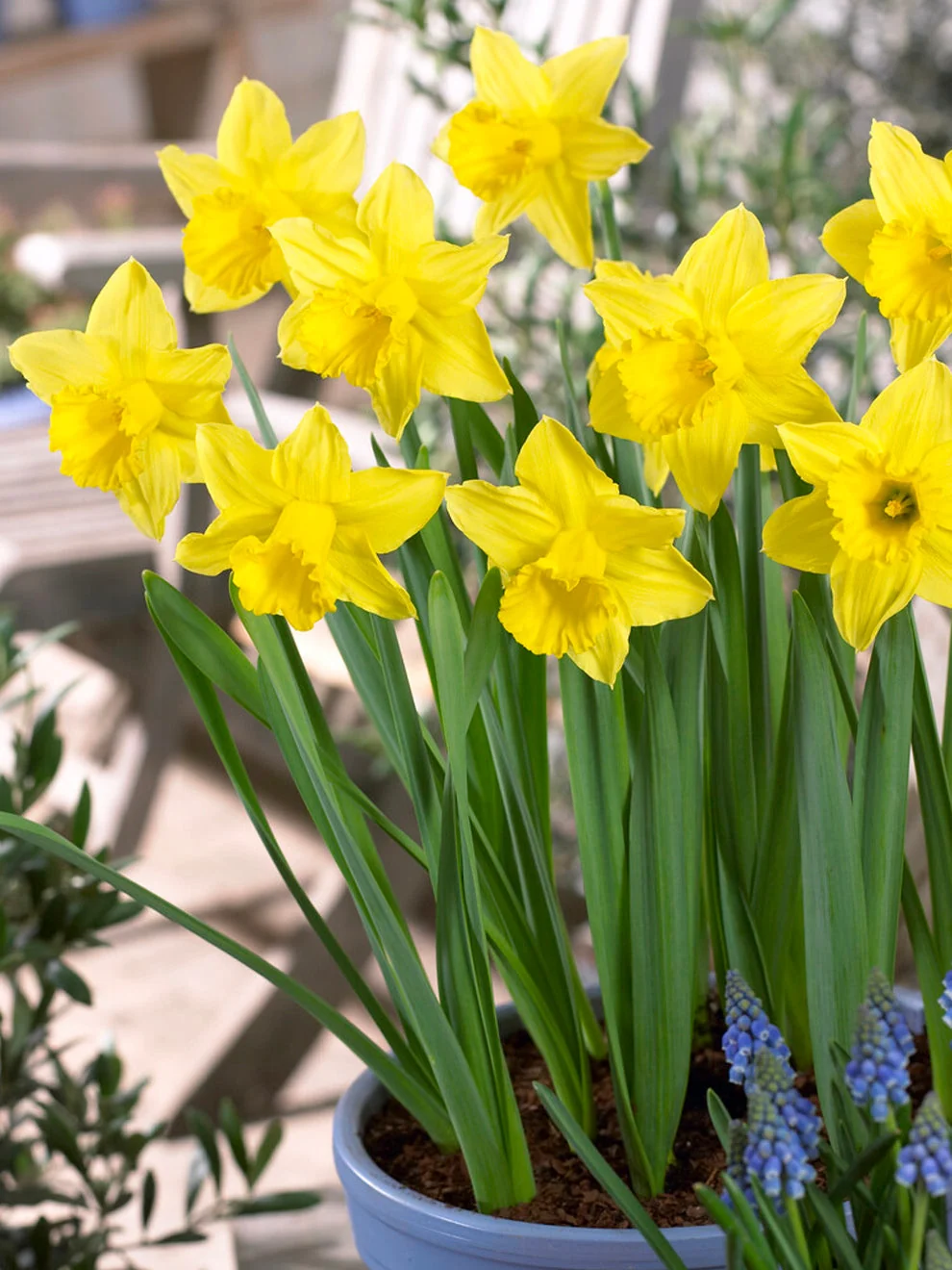
The product description says this collection combines eight early, mid and late daffodil varieties with long-lasting trumpet blooms. Its advantage over one variety is that the season is the organising idea, rather than one flower shape or colour. The page lists a height range of 40 to 50 cm and says the bulbs naturalise, making them an option for borders or containers.
The convenience comes with less control than selecting varieties separately, and no exact flowering dates are promised for every garden. Soil and aspect affect the display. For one consistent daffodil look or a specific palette, compare individual varieties too. For an extended spring display, the eight-variety mix makes the more direct case. See the listing for Eight Weeks of Daffodils if sequence is your priority.
- Choose a sunny or partly shaded border or container.
- Plant in autumn, following the product page’s planting depth and spacing guidance.
- Allow for local conditions rather than treating the collection name as a guaranteed calendar.
Tulip Jumbo Darwin Mix balances display and cutting
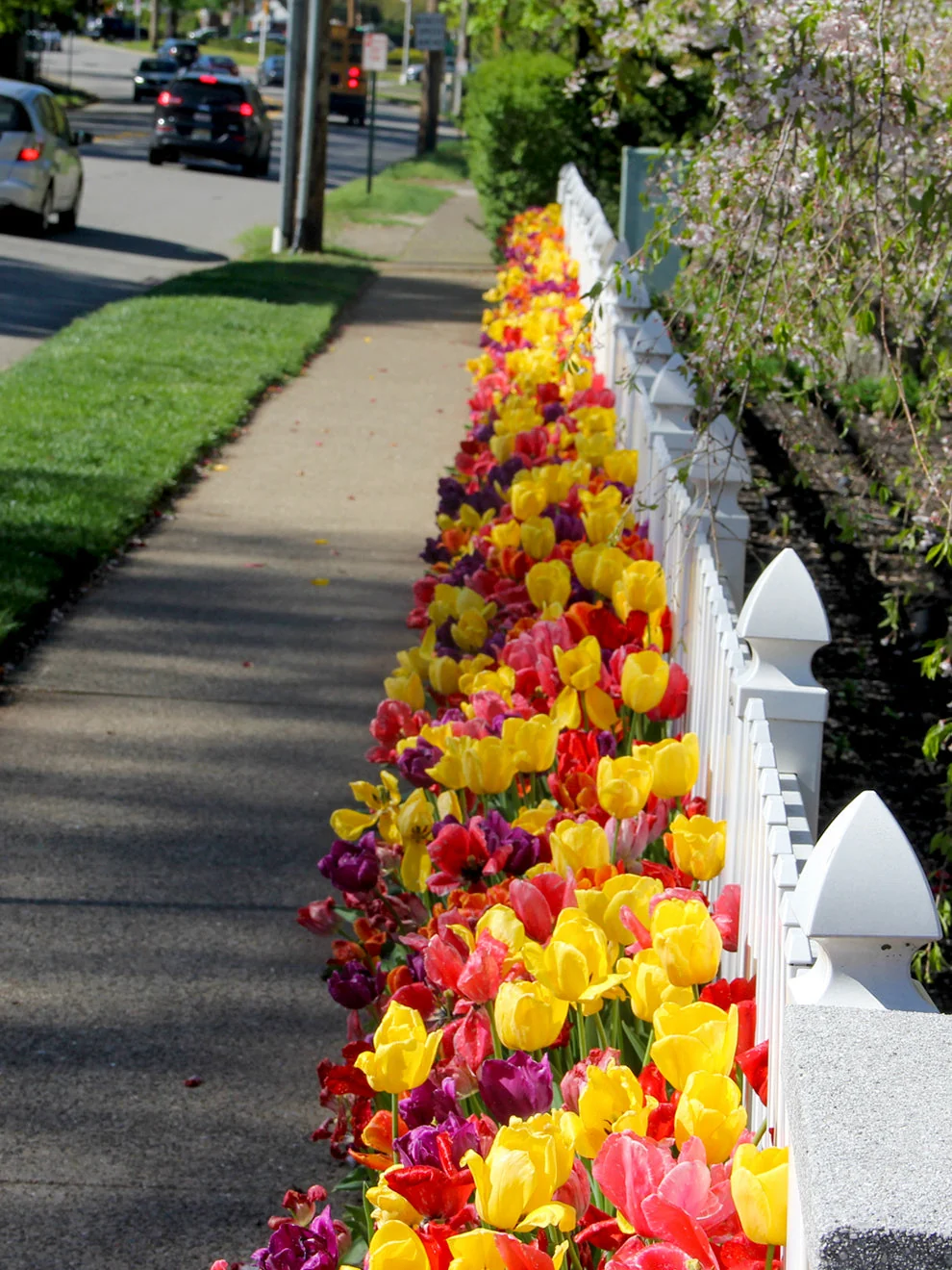
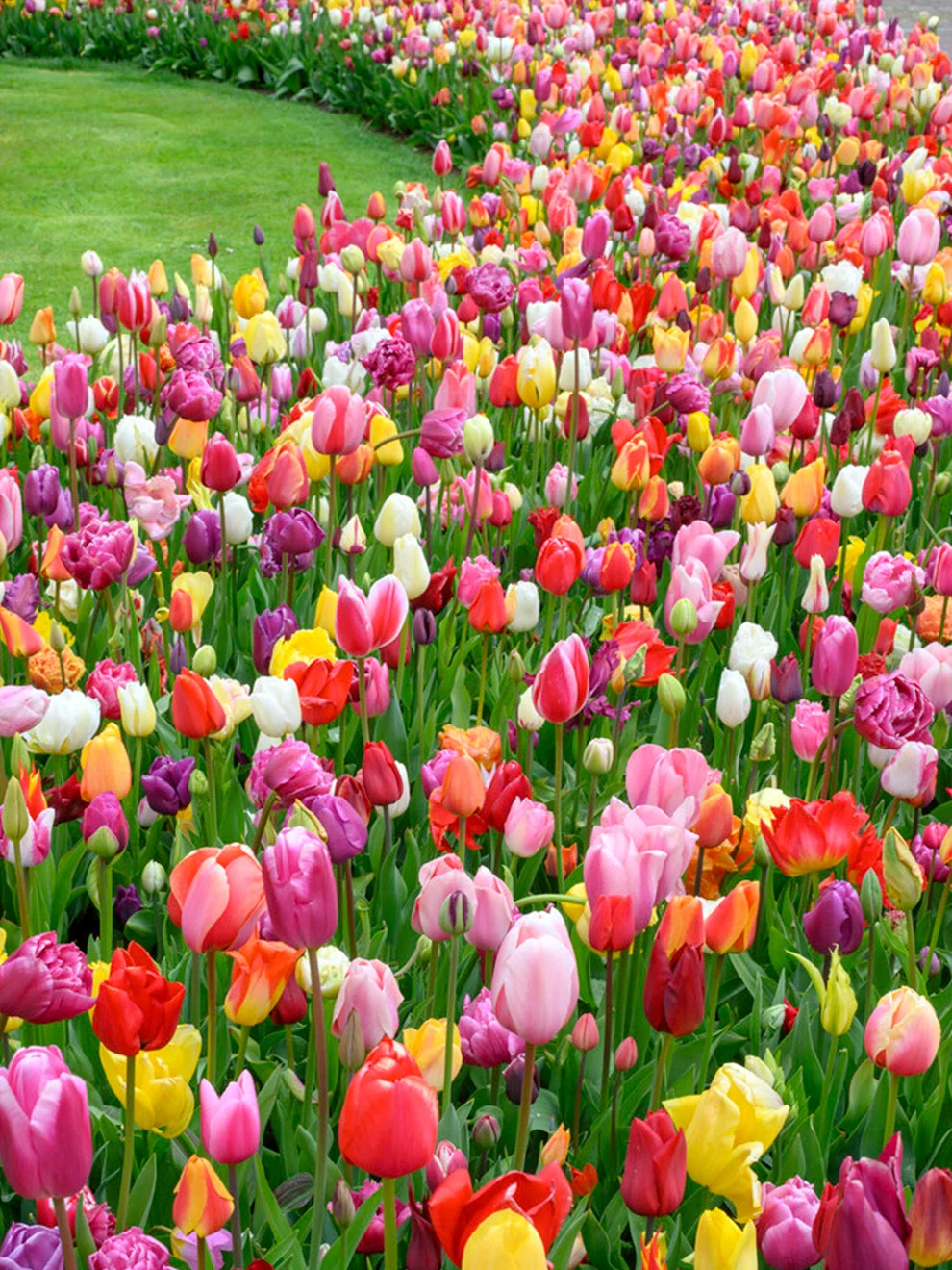
Tulip Jumbo Darwin Mix is the practical middle ground if you want more than a single statement bloom. DutchGrown™ flags it as excellent for cutting, fragrant and naturalising. That gives it an edge over Globemaster when you want flowers indoors as well as a border display.
Against a single-variety tulip, however, the mix offers less exact colour planning. The word “mix” is useful shorthand, but shoppers designing around existing planting should inspect the product images and description rather than assume a precise shade ratio. Several bulb-count options let you adjust scale. This is the best fit for a mixed tulip bed, not an exact cultivar plan. For a more contained tulip choice, the Houston Triumph selection is another page to compare; it still represents a mix, so neither is as exact as buying a named single cultivar. Compare the current listing for Tulip Jumbo Darwin Mix with the alternatives before choosing pack size.
- Pick the Darwin mix when cutting is part of the brief.
- Check the current product photos and pack choices before settling on the planting scale.
- Use a single named cultivar if colour uniformity is more important than variety.
Allium Globemaster earns space as a focal point
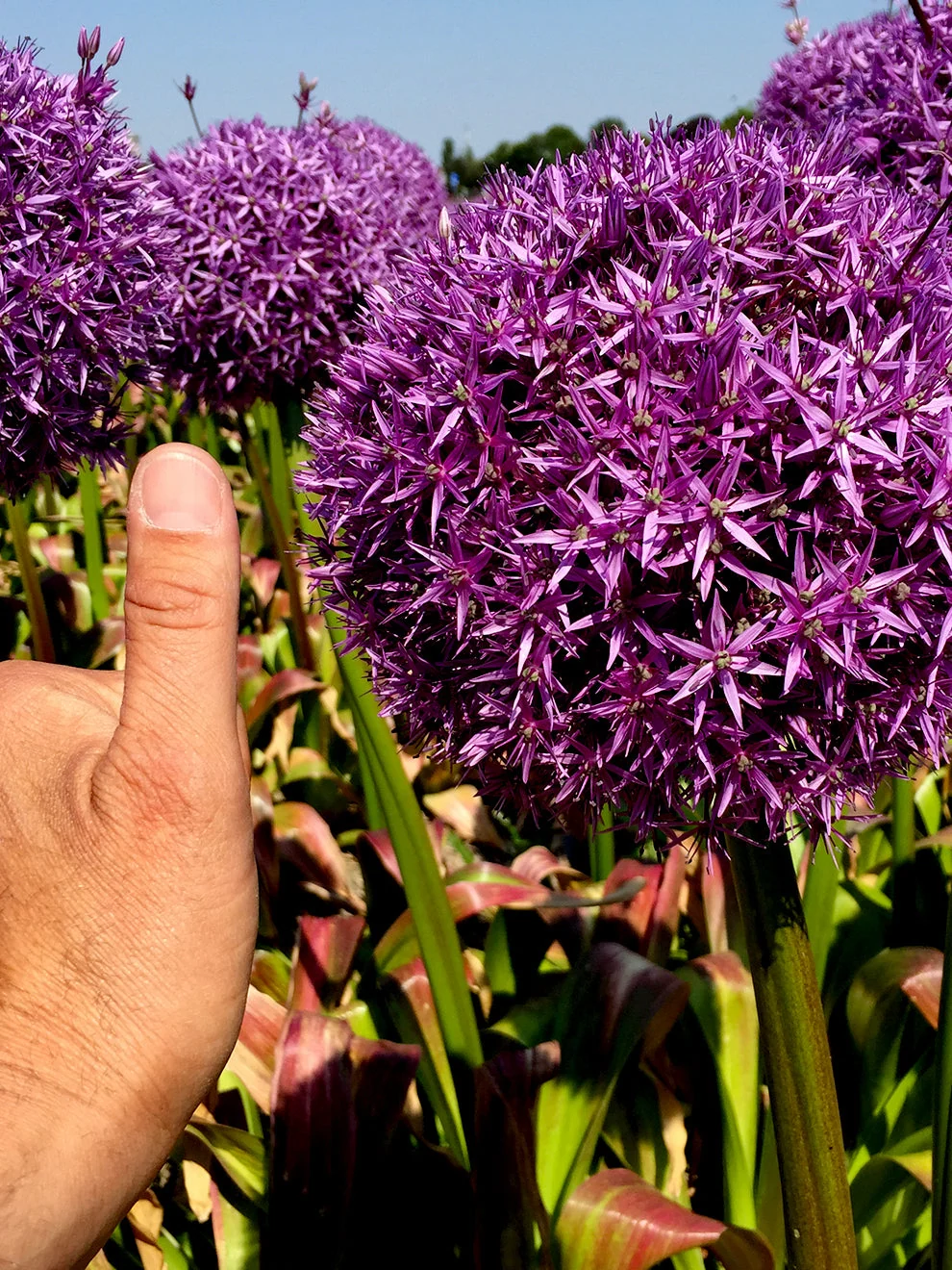
For height and recognisable form, Allium Globemaster is the most distinctive of the three. The Globemaster listing describes silvery purple spherical blooms up to 25 cm across, a height of 90 cm and flowering from late spring into early summer. DutchGrown™ also says it attracts bees and butterflies, is suitable for cutting and naturalises. That makes it an accent for a border where its scale will be visible.
The trade-off is coverage. It is not a carpet planting. One large allium makes a stronger point than a carpet of low flowers, but it cannot deliver the continuous colour of a broader bulb mix. Height is the deciding advantage. Its height also needs placement: tuck it where stems rise above lower planting rather than placing it where the spherical heads obscure shorter neighbours. As a single-variety purchase, it offers choice of quantity and placement rather than palette. For one memorable silhouette, Globemaster wins; for a broad spring display, use it as a supporting layer rather than the whole plan.
Autumn timing and selection shape the result
All three are autumn-planted, so none avoids seasonal planning. The daffodil page recommends autumn planting, including October or November, with directions for borders and containers. DutchGrown™ says dispatch timing appears on product listings; check the UK schedule before planning around delivery.
Before choosing, compare the options against a few real constraints:
- Planting area: count the space and decide whether flowers should sit in drifts, rows or a container.
- Desired length: staggered daffodil varieties address a longer sequence, while one allium variety creates a later focal moment.
- Palette: mixes save research time but give less cultivar-level control than individual bulbs.
- After flowering: naturalising is listed for all three, but foliage still needs time to die back after blooms fade.
Compared with loose bulbs at a garden centre, the direct store makes collection details and pack sizes easy to compare, but offers a curated selection. Exact-cultivar shoppers should check individual listings; convenience-focused buyers can choose by garden job.
Ready to choose your spring bulb plan?
Our pick for a longer daffodil season is Eight Weeks of Daffodils. For cutting and a mixed tulip display, the Jumbo Darwin Mix is the more versatile choice. Choose Allium Globemaster when height, pollinator interest and a spherical bloom matter more than a wide sweep of colour. The Globemaster product page includes the current bulb options.
The honest limitation is that a mix means less control over every cultivar, and flowering varies with local conditions. Check each UK product page for its current availability, options and planting notes before deciding how much space to commit.
Choose the daffodils for a longer sequence, the Darwin tulips for cutting, and Globemaster for a single architectural accent.

