


Share This Article
Spring bulbs are easy to buy one variety at a time, but a garden display works better when each plant has a place and a role. Before choosing colours, consider how tall the flowers should be, when you want them to appear and whether the site is a border, container or path edge.
We reviewed the UK product pages at DutchGrown™ for this guide. Their named varieties make it possible to plan with actual heights, flowering periods and planting notes rather than selecting by colour alone.
Some links in this article are affiliate links: if you make a purchase through them, we may receive a small commission.
Before you read on
- Use Mini Daffodil Polar Hunter for a fragrant, compact position near paths or containers.
- Choose Fritillaria Red Beauty when a tall scarlet focal point suits the border.
- Add Tulip Boot Camp for late-spring texture and a cut-flower option.
- Check the UK store’s seasonal dispatch schedule and each listing’s planting instructions before choosing quantities.
Start with the garden position, then choose a height
Walk the area you want to plant and note its light, drainage and viewing distance. A small bulb may disappear in the middle of a deep border, while a tall focal plant can overwhelm a narrow edge. Height is a placement tool and a useful way to avoid crowding and a useful way to avoid crowding: put lower flowers where they can be seen close up, and reserve taller stems for the middle or back of a border.
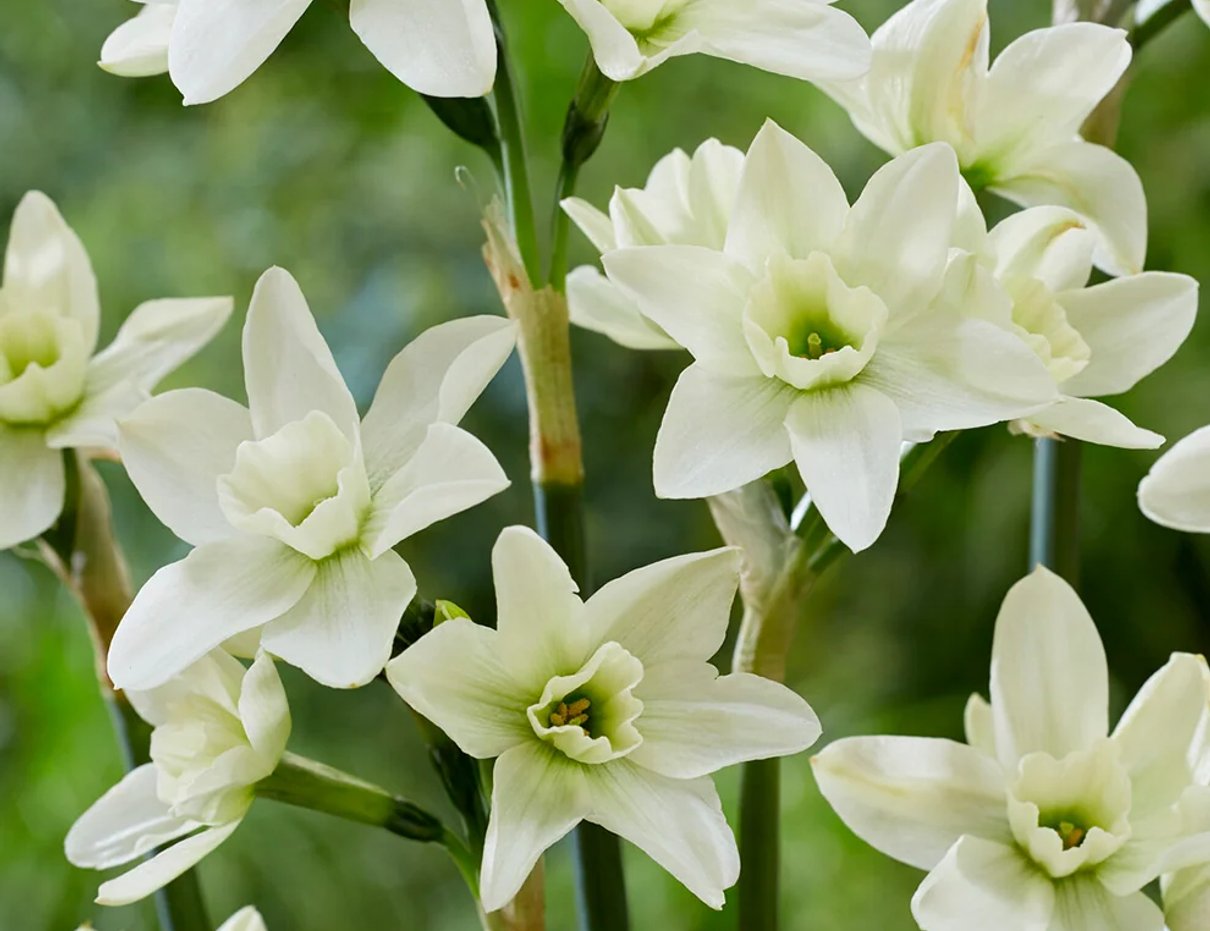
Mini Daffodil Polar Hunter is listed at around 30-35 cm, with several flowers per stem and a fragrant display. That scale suits a path edge, rock garden or container where its pale green-to-cream flowers can be noticed at close range. See the Polar Hunter product details when deciding how it fits your available space.
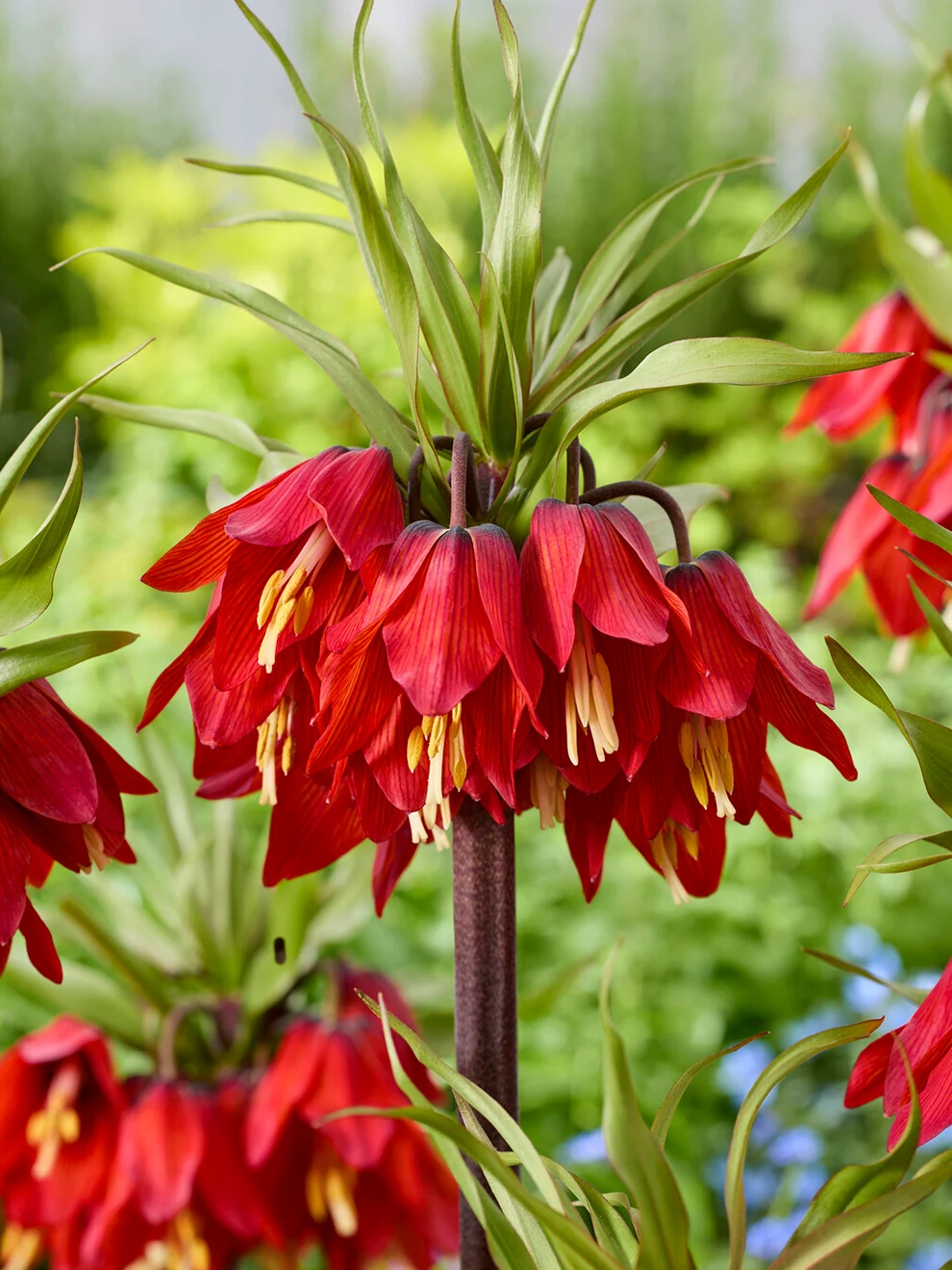
For a more vertical accent, Fritillaria Red Beauty is described as reaching 75-90 cm. Its scarlet bell-shaped flowers and upright form make it a better candidate for a visible border position than a tight container. The listing also gives full sun to partial shade as its position, so compare that with the light your chosen spot actually receives before adding it to a plan.
Use flowering sequence to build a longer display
Height creates layers, while timing helps those layers feel connected. Check the stated flowering period for every variety and combine early, mid and later spring choices where the site conditions suit them. Catalogues describe expected timing, but local weather and planting conditions can shift when flowers appear, so treat dates as a planning guide rather than a fixed calendar.
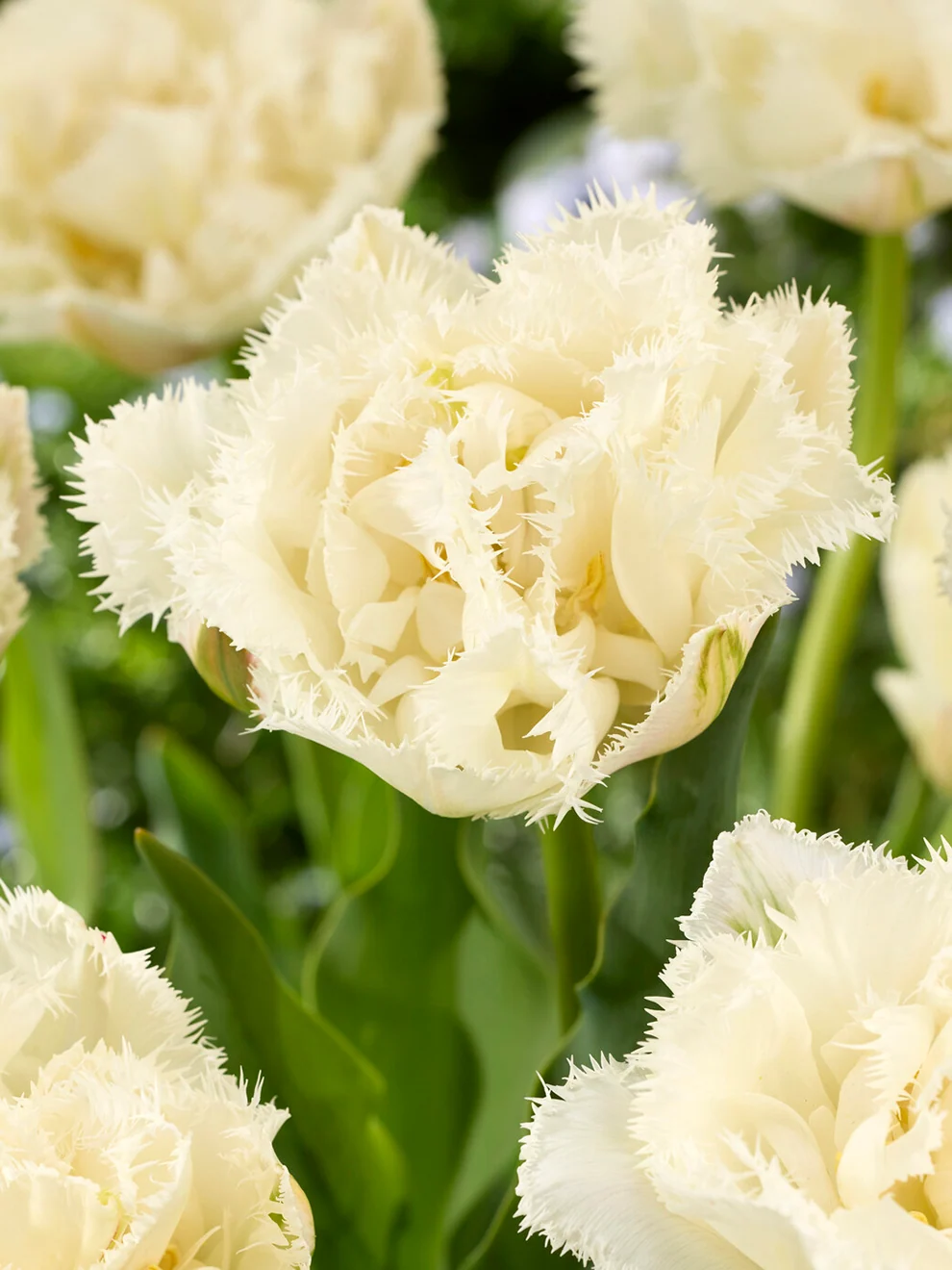
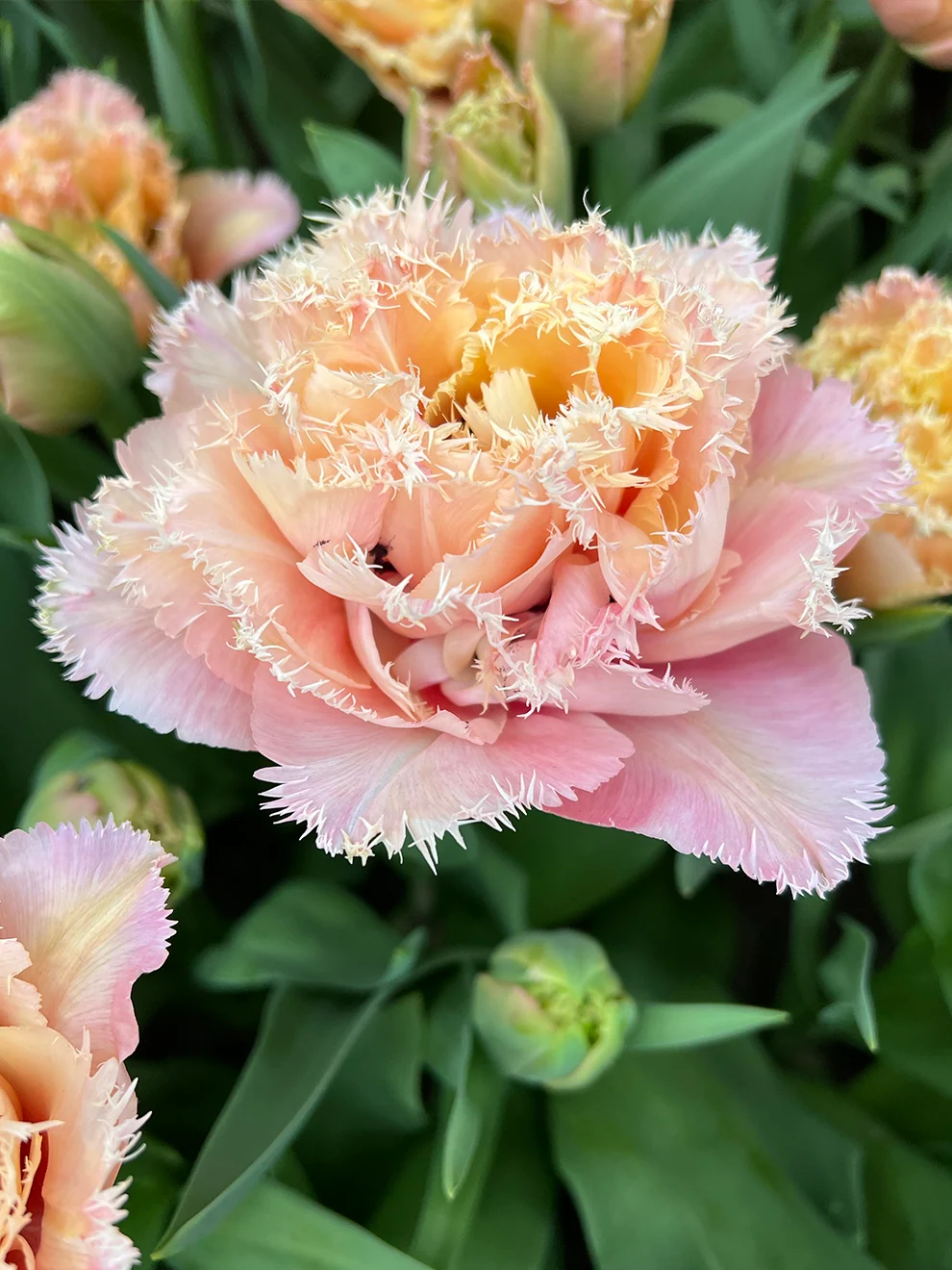
Tulip Boot Camp is described as a late-spring fringed tulip, with creamy flowers, strong stems and suitability as a cut flower. That makes it useful toward the later part of a scheme and for a small cutting patch. Review the Boot Camp listing alongside varieties with earlier timing rather than expecting one planting to carry the whole season.
Think in overlapping waves of colour, form and timing, not isolated colour moments. A compact daffodil close to a path can open the season’s detail, a taller fritillaria can provide structure, and a later tulip can extend interest. If cutting flowers matters, reserve a separate group for harvesting so the border still has a coherent display after stems are picked.
Compare three bulbs by the job they do
This short comparison focuses on practical roles. DutchGrown’s UK listings include more varieties, but these three show how scale and flower form can guide a shortlist. Follow the product page’s own planting depth, spacing and soil guidance for the chosen bulb.
| Product | Garden role | Useful detail |
|---|---|---|
| Mini Daffodil Polar Hunter | Path edge or container | 30-35 cm, fragrant, several flowers per stem |
| Fritillaria Red Beauty | Border focal point | 75-90 cm, scarlet bells, sun to partial shade |
| Tulip Boot Camp | Late-season texture or cutting | Fringed cream petals and upright stems |
The table is a starting point, not a complete planting recipe. For example, a tall variety needs enough depth behind it to be seen, while a compact plant often reads better in a group than as a single dot. Product pages can help confirm bulb format and the store’s recommended conditions; Polar Hunter’s listing, Red Beauty’s listing and Boot Camp’s listing give variety-specific context for that check.
Set the planting schedule before ordering
Seasonal bulbs are often sold ahead of the time they are planted. The UK store’s shipping schedule says autumn-planted bulbs are dispatched from early October through November, while spring-planted bulbs and plants are dispatched from mid-March through June. Dates can change with stock and season, so check the live schedule and product page when planning delivery.
Before adding items to a basket, work through these checks:
- Measure the bed or container and estimate how many planting positions it can hold.
- Check the site’s sun exposure, drainage and soil against the variety’s instructions.
- Group products by their planting season so arrivals can be planted promptly.
- Decide whether you want repeated drifts, a focal point or flowers for cutting.
Seasonal dispatch is useful for planning and ordering ahead, though it means a preferred variety may not ship immediately. The store also says it sends bulbs at the planting time so they can be planted after arrival. If the garden is not ready, prepare the site first and verify current availability rather than ordering on colour alone.
Keep the shortlist tied to your garden
DutchGrown™ suits a planned purchase from a varied catalogue because its UK catalogue gives gardeners a wide choice of named bulbs and plants, while individual listings explain the traits that separate one variety from another. The useful next step is to shortlist by location and flowering role, then check the live product details and seasonal dispatch information before you decide.
One limitation is that catalogue descriptions cannot settle how a particular bed will perform. Drainage, local weather, light and maintenance still shape the result, and expected bloom timing is not a guarantee. For a balanced first plan, pair one compact variety for close viewing with a taller focal plant and a later-flowering texture choice.
Ready to plan a layered spring garden?
We recommend starting with the garden’s actual conditions, then comparing named varieties such as Mini Daffodil Polar Hunter, Fritillaria Red Beauty and Tulip Boot Camp. The store is a natural place to continue if you want UK availability, planting notes and a broad range together.
Choose bulbs by position, height and flowering role, then use DutchGrown’s UK listings to confirm the planting details.

