


Share This Article
Portable power is no longer one single purchase. A compact battery can keep phones, lights and cameras running on a campsite, while a larger system may be expected to support a caravan fridge or help keep essential home devices going during an outage. The right choice depends on the load, the setting and how often you want to recharge away from a socket.
That is where Jackery becomes a capacity comparison rather than a simple brand choice. Its UK store covers small Explorer units, mid-range power stations and solar-generator bundles. We have compared three clear steps in that range, then weighed them against the familiar alternative: a petrol generator.
There is no single winner for every buyer. Portability, output, battery capacity and solar input each matter more in different situations.
Some links in this article are affiliate links: if you make a purchase through them, we may receive a small commission.
Before you read on
- Explorer 500 v2 is the compact pick with 512Wh capacity and 500W output.
- Explorer 1000 v2 adds 1070Wh capacity and 1500W rated output for broader appliance use.
- Solar Generator 2000 v2 reaches 2042Wh capacity and pairs a high-capacity station with solar input.
- Solar charging, quiet operation and fuel-free use are the key alternatives to weigh against a petrol generator.
The capacity ladder answers different power questions
The store’s range makes capacity the first useful filter. Smaller stations are easier to move and sensible for electronics or low-draw essentials. Larger models bring more headroom for appliances, longer runtimes and backup planning, but they also occupy more space and cost more to specify. The current Jackery range shows that progression clearly.
For a quick comparison, the figures below are the capacities and outputs stated on the relevant UK product pages. They describe what each tier is designed to handle, not a promise that every appliance will run for the same time.
| Model | Store-stated specification | Best match | Main compromise |
|---|---|---|---|
| Explorer 500 v2 | 512Wh, 500W | Camping and day trips | Less appliance headroom |
| Explorer 1000 v2 | 1070Wh, 1500W | Caravans and mixed loads | Heavier to carry |
| Solar Generator 2000 v2 | 2042Wh, LiFePO4 battery | Home backup and larger loads | Less portable |
The practical winner is therefore conditional: the lightest model wins when transport is part of the day, while the larger stations win when avoiding a low-battery warning matters more than lifting convenience. Use the store’s live specifications to confirm the version that fits your load.
Explorer 500 v2 keeps campsite power light
Explorer 500 v2 is the clearest alternative to carrying a collection of power banks. Jackery lists a 512Wh capacity, 500W output, six output ports and fast charging on its UK product page. The small format makes sense for phones, cameras, LED lighting, laptops and modest campsite equipment.
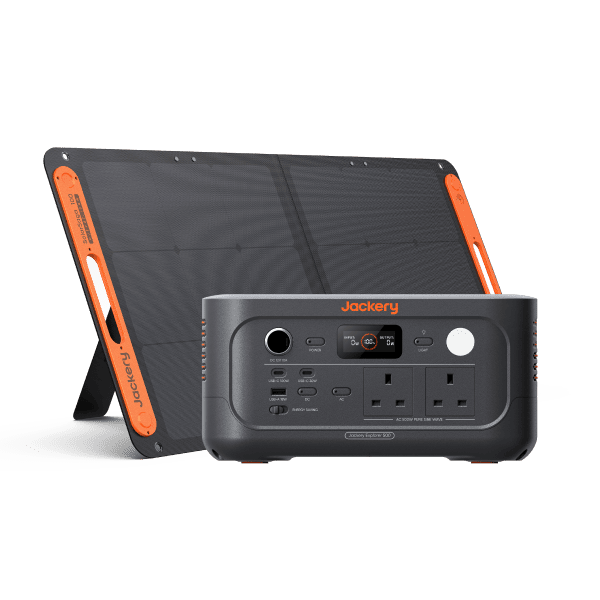
Its strengths are manageable size, quiet battery operation and simple solar expansion. The limit is equally clear: 500W is not a substitute for a high-output home generator. Check the running and starting demands of anything with a motor or heating element before choosing this tier, then review the Explorer 500 v2 details.
- Choose it for short camping trips and mobile work.
- Pair it with a compatible SolarSaga panel when socket access is limited.
- Keep expectations to smaller electronics and essential low-draw gear.
Against a petrol generator, the Explorer 500 v2 avoids fuel storage, exhaust and engine noise. A petrol unit may still be the better tool for sustained high loads, especially where rapid refuelling matters more than silent operation.
Explorer 1000 v2 gives caravans more working room
The Explorer 1000 v2 is the middle option for buyers who have outgrown a compact station but do not need the bulk of a home-backup system. The UK store states 1070Wh capacity and 1500W rated output, giving it a wider working range for caravan trips, outdoor cooking accessories and several devices used in the same day.
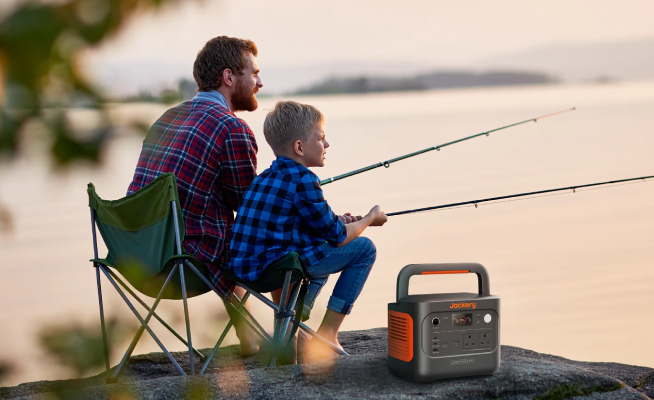
Compared with the smaller station, this model offers more capacity, higher output and more breathing room for unpredictable days. It is the most balanced choice for many caravan owners, but it is no longer the easiest thing to carry one-handed. The added capability only helps if you are prepared to transport and recharge it. The Explorer 1000 v2 listing sets out the product-specific configuration.
For a mixed-use setup, the Explorer 1000 v2 product page is the sensible place to check the current configuration. Buyers should also compare the included charging method with their travel routine, particularly if they plan to use solar rather than a vehicle or mains connection.
Solar Generator 2000 v2 suits heavier home backup
The Solar Generator 2000 v2 shifts the discussion from weekend convenience to resilience. Jackery lists 2042Wh capacity and a LiFePO4 battery, while the product description highlights instant UPS backup for essentials such as a refrigerator and internet connection.
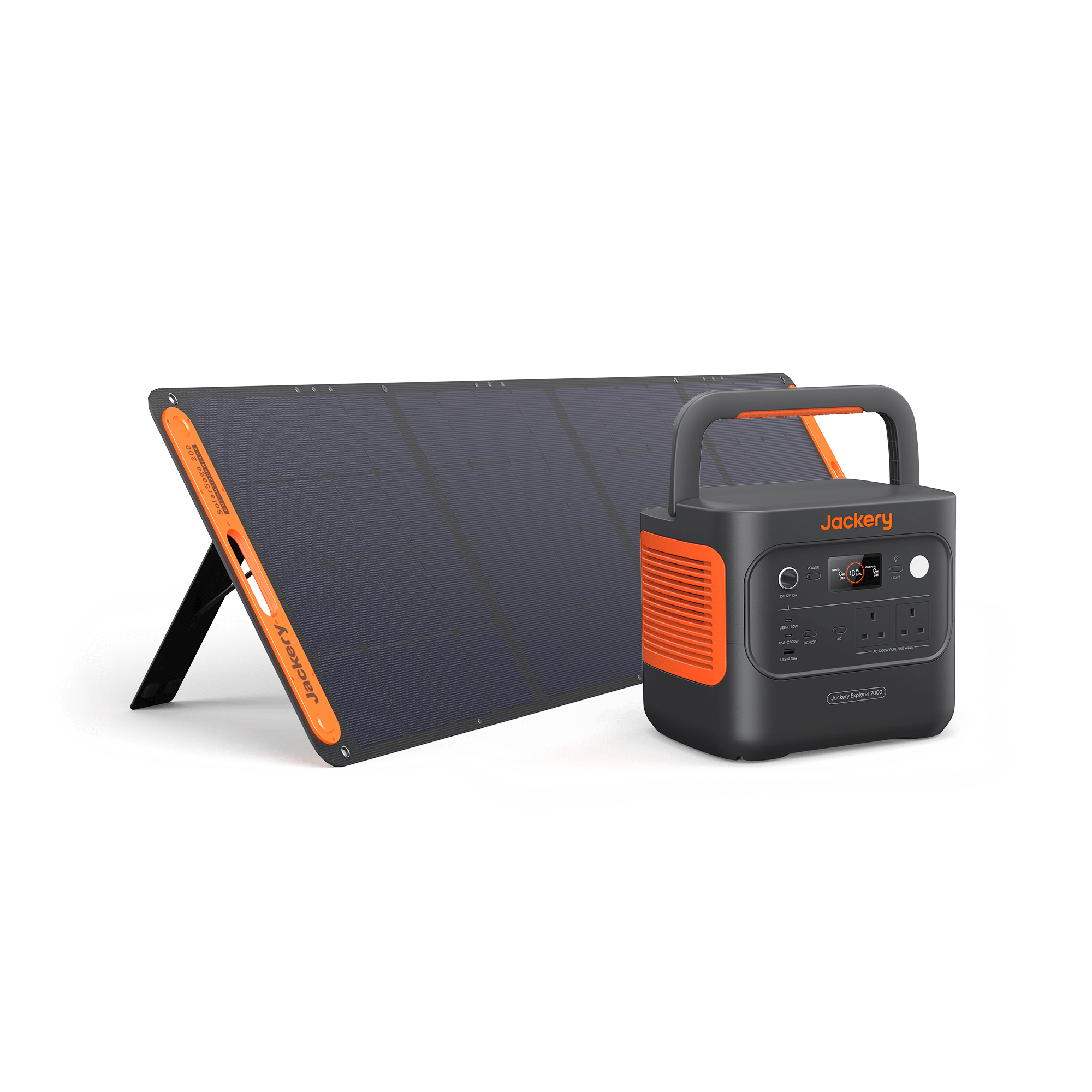
This is the strongest match for larger loads and longer backup planning, not a casual day at the beach. Its advantages include battery-based silence, solar compatibility and a deeper reserve. Its honest limitation is portability: a high-capacity system asks for more storage space and a more deliberate setup than the Explorer 500 v2. Compare the Solar Generator 2000 v2 options with the loads you actually need.
It also should not be treated as an automatic whole-home solution. Look at the devices you actually need, their starting loads and the expected outage length. The Solar Generator 2000 v2 listing is where to confirm the current contents and configuration before committing.
Solar power changes the comparison with petrol generators
A petrol generator still has a place. It can provide sustained output while fuel is available and may suit workshops or repeated heavy-duty use. It also brings engine noise, exhaust, fuel handling, maintenance and a requirement for safe outdoor operation. Those are not minor details when the goal is quiet camping or indoor-adjacent backup.
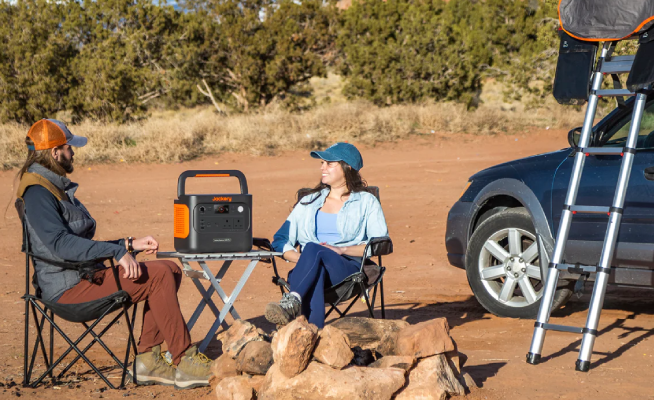
Jackery’s strongest case is situational: when the buyer values low noise, no fuel canisters and the ability to recharge from solar, a battery station is easier to live with. The store also offers use-case guidance for caravans, fishing, camping and off-grid living, which helps buyers connect capacity to a real routine rather than choosing the biggest box.
- For quiet weekends, pick battery portability over engine output.
- For a caravan, compare capacity with the devices used together.
- For home backup, prioritise UPS behaviour, reserve capacity and safe placement.
- For repeated heavy loads, compare the station’s rated output with a petrol generator’s continuous capability.
Solar charging is not instant and depends on conditions, panel placement and the system’s input limits. It is best understood as a way to extend useful time away from the grid, not as a guarantee of unlimited power. The Jackery store is the right place to check compatible panels and current configurations.
Ready to match your power needs?
Our recommendation is straightforward. Choose Explorer 500 v2 for the lightest campsite setup, Explorer 1000 v2 for the most adaptable caravan option, and Solar Generator 2000 v2 when home backup and larger loads justify the extra size.
The limitation is that no battery station removes the need to calculate your loads. Check the current product configuration, charging options and store price before choosing the capacity tier.
Explorer 1000 v2 is the best all-rounder, while Explorer 500 v2 and Solar Generator 2000 v2 win at opposite ends of portability and backup capacity.

